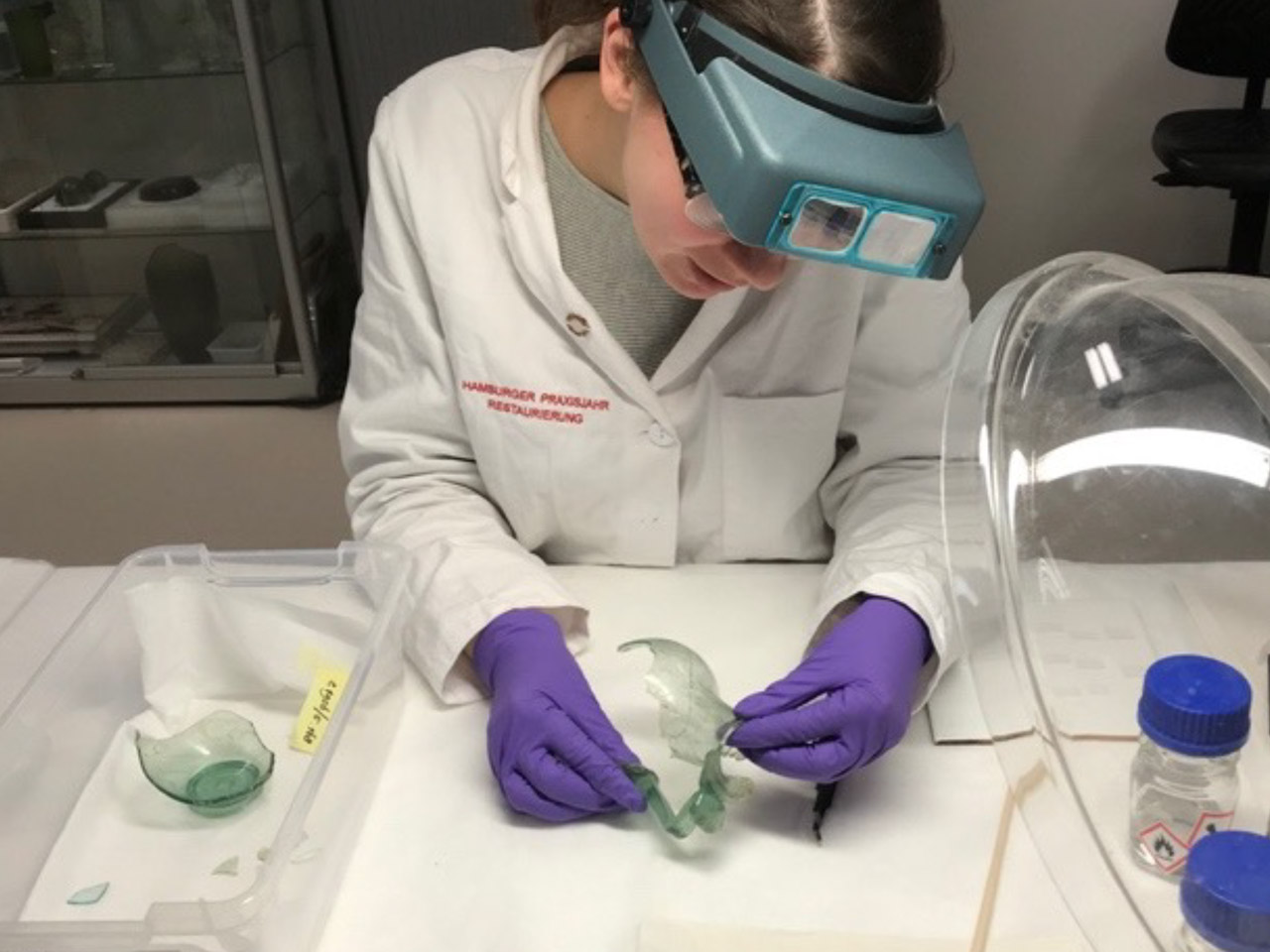
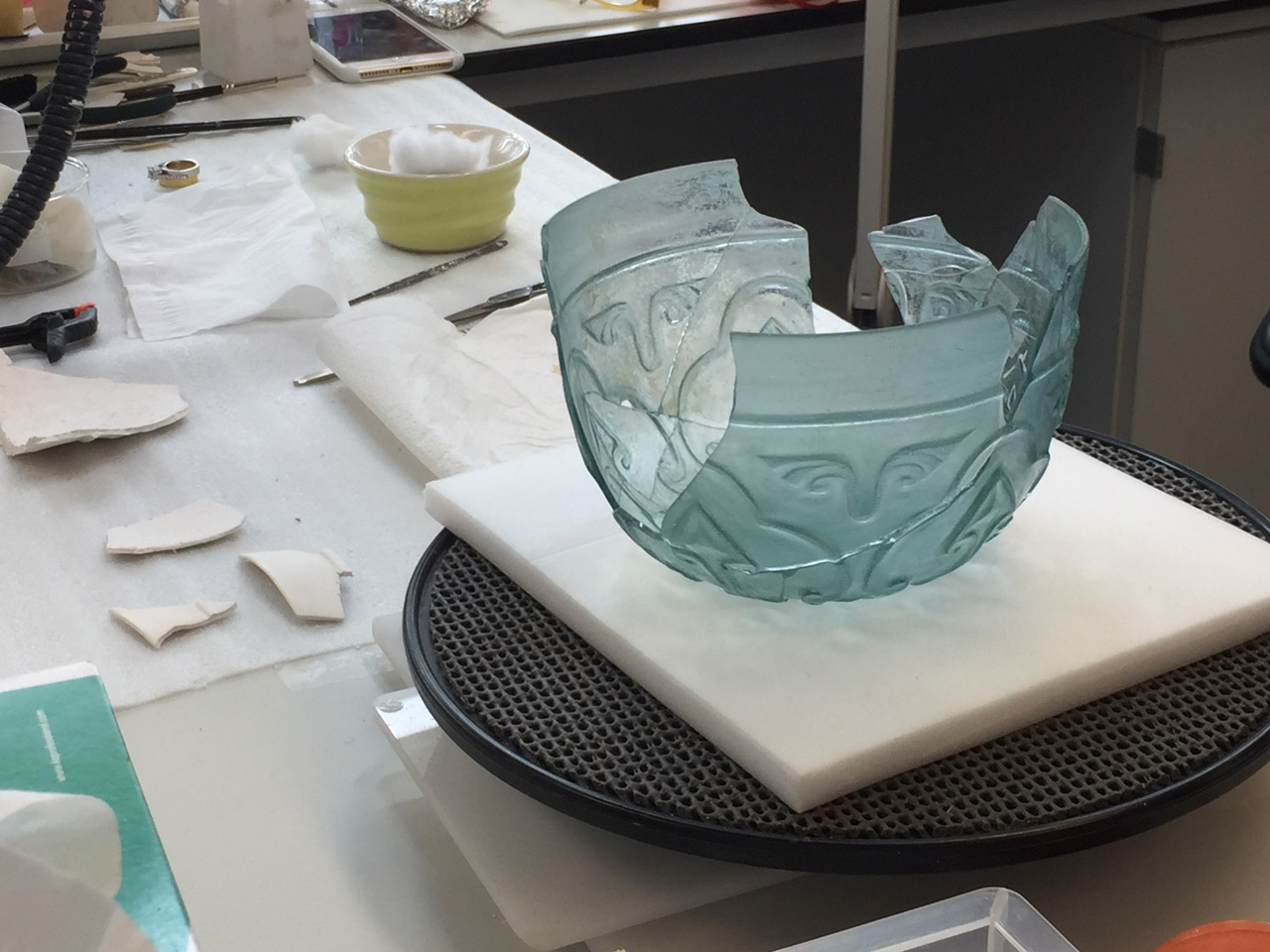
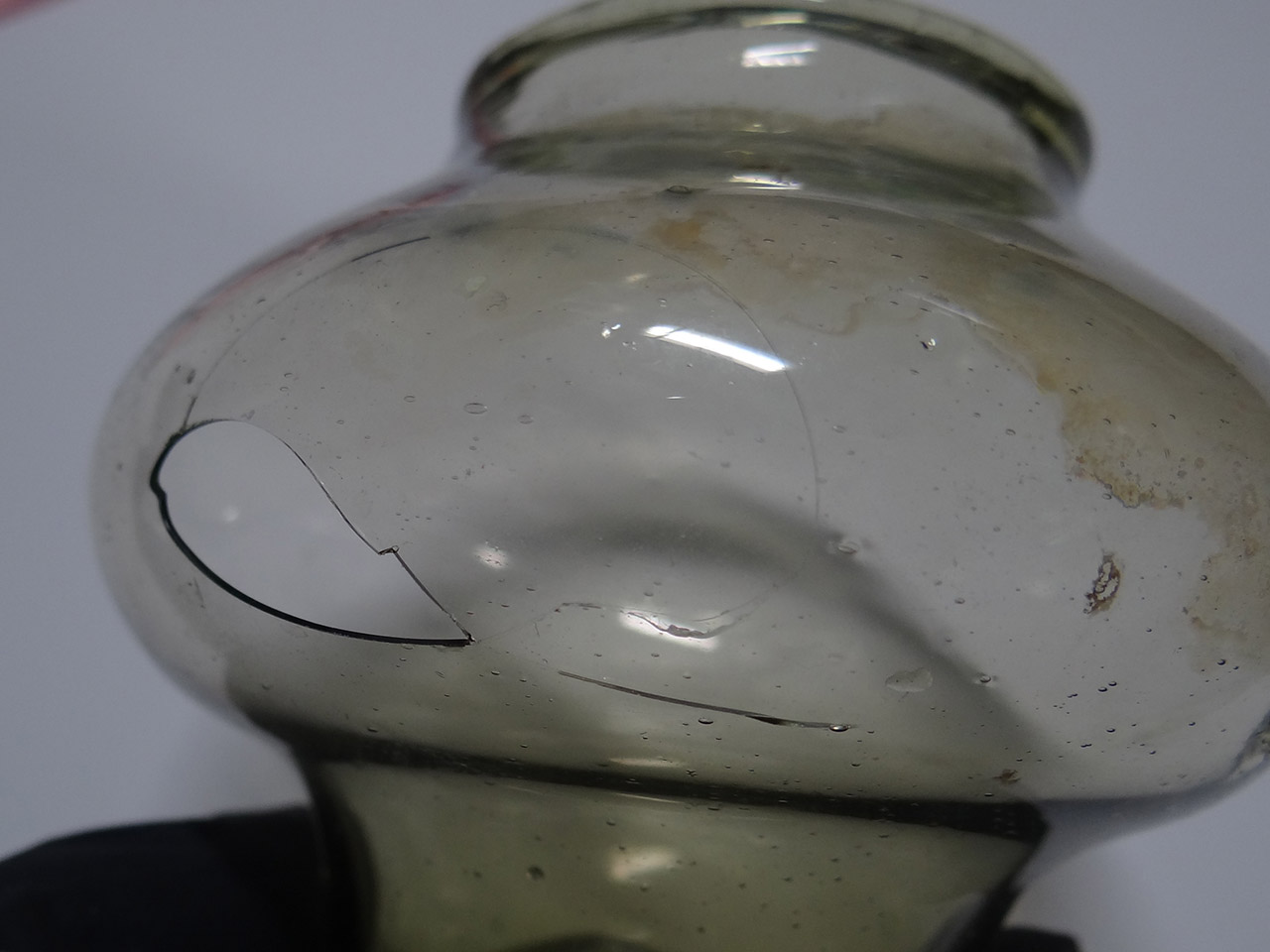
Adhesive treatment may be necessary if a glass object has broken or if an old adhesive bond in an artwork, sometimes intentionally applied by the artist, is no longer stable. A crack may also need stabilising with an adhesive impregnation.
A conservator will first examine how the glass broke or cracked, localise the point of impact and try to determine the cause. Sometimes existing internal stresses or cracks can contribute to further breakage, but the cracks can also result from glass instability. Sometimes there is a direct link to an incident in which the object was dropped or struck by something or someone. (See research and diagnosis, stress or visual examination.) If an old restoration or adhesive bond forms part of the original artwork, it must first be carefully examined.
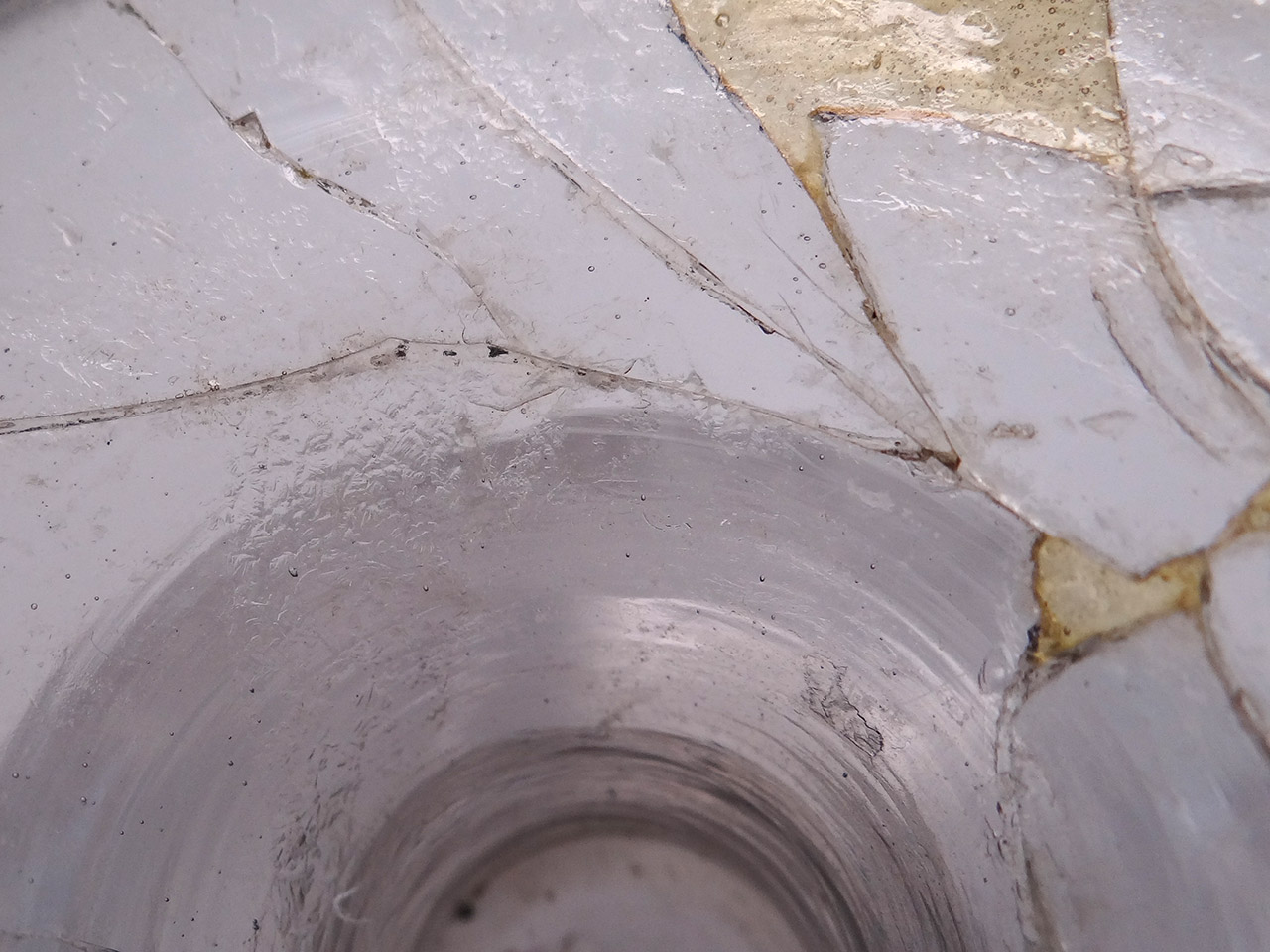
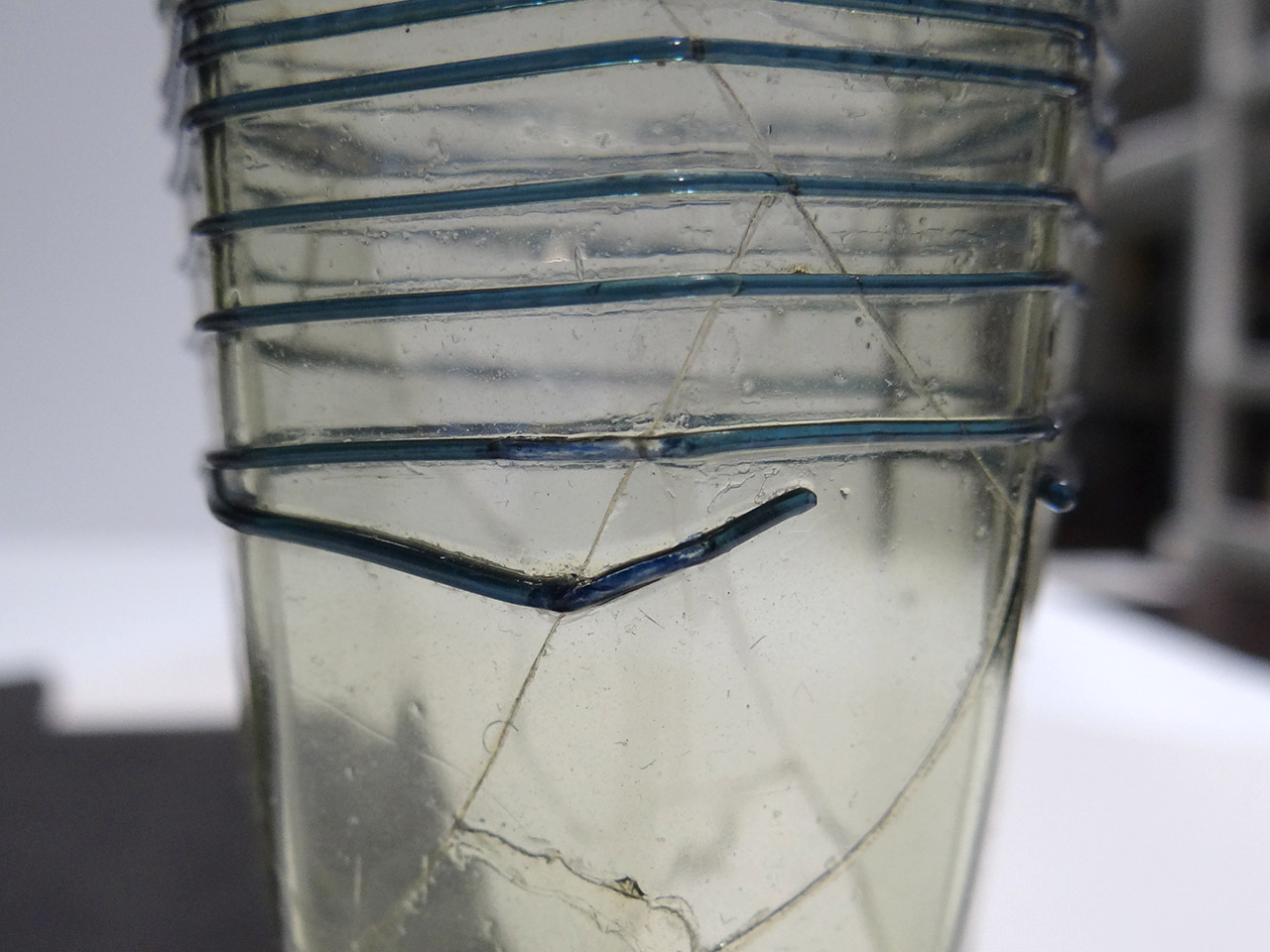
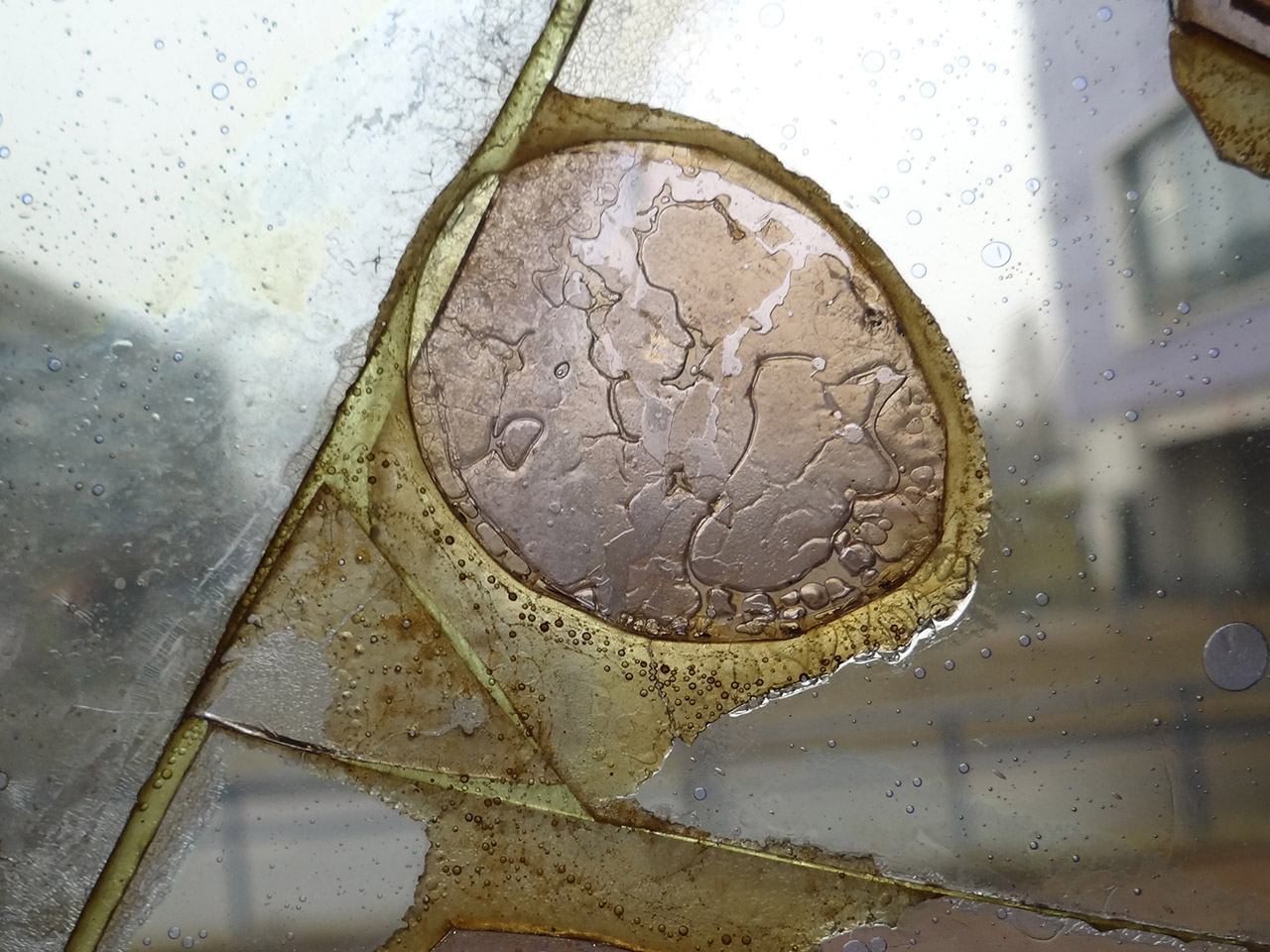
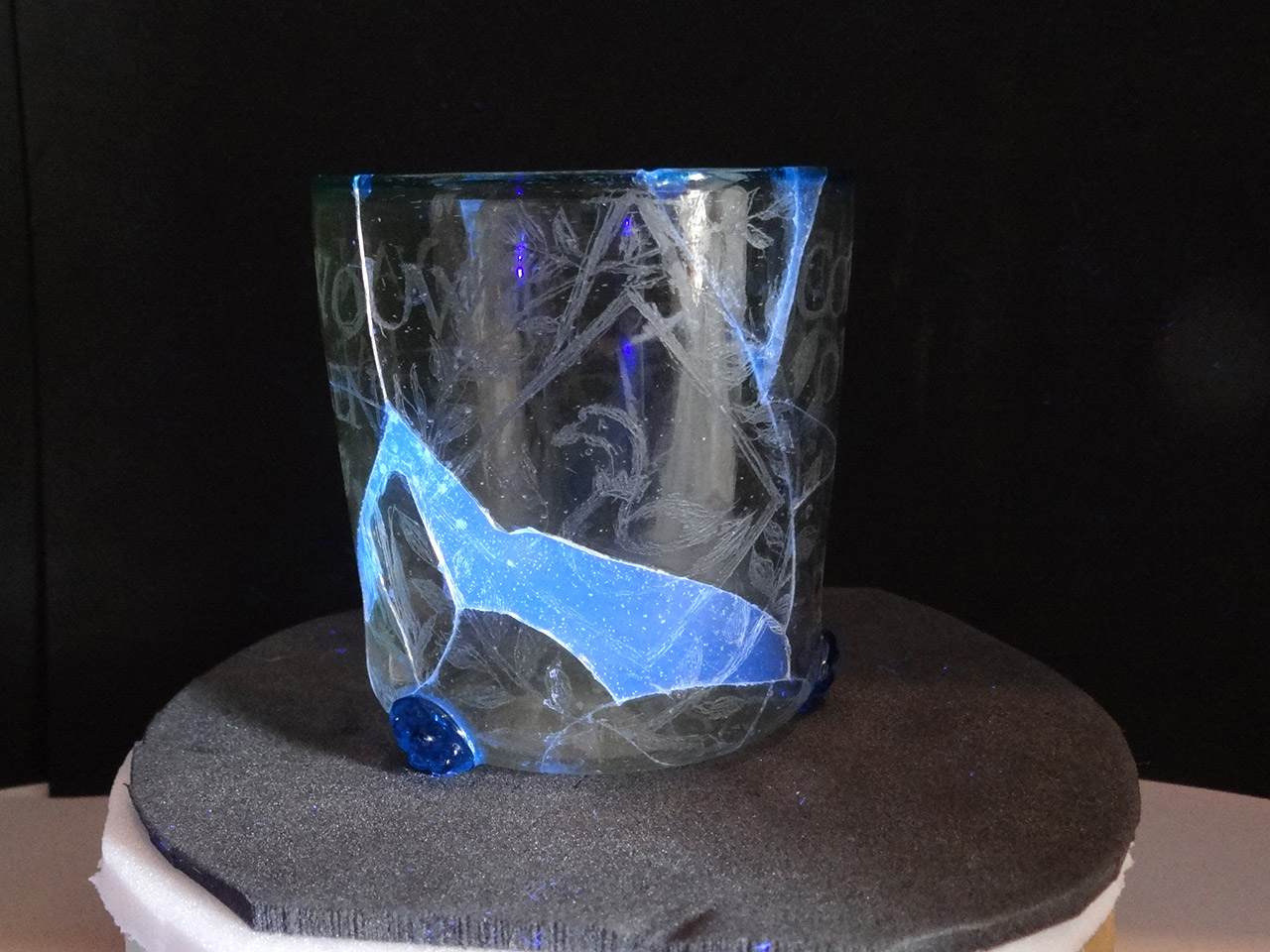
Examples of old adhesive joins that need to be examined and monitored. In some cases, the adhesive has lost its bonding strength. A yellowish colour does not necessarily mean that the adhesive has lost its bonding strength. Other indicators, such as mirroring on the fracture surface, must also be examined. In some cases, it is important to identify the old adhesive. This can be done using light, UV light or FTIR (Fourier Transform Infrared Spectroscopy). The conservator must consider beforehand why the adhesive is there and what purpose it serves. PHOTO M. Slager
Adhesives
A conservator not only keeps up to date on recent research into the bonding strength and stability of adhesives but may also initiate research into new adhesives where special circumstances require it. The requirements for an adhesive vary. It may need to bond multiple materials, withstand outdoor use, have sufficient body and transparency to bridge poorly fitting fragments, be fluid enough to penetrate a small crack, accept colourants, or have a suitable refractive index that makes damage less visible. A conservator will arrange the fragments and determine the order and technique for gluing them together. Filling may be necessary to stabilise an object or for aesthetic reasons. A conservator will carefully explain and document these decisions.
Is an existing adhesive joint still stable?
An artist may have applied adhesive as an intentional part of the object. Does the adhesive only bond parts of the object, or does it also play an aesthetic role? An adhesive join may also result from an earlier restoration. The conservator can determine whether an old adhesive bond still holds strongly enough by examining any mirroring in the fracture surface, the alignment of fragments or bonded components, and the sound. In some cases, the adhesive used in the past is known and its ageing characteristics are well documented. In other cases, UV examination or chemical analysis (FTIR) must be used to identify the adhesive. Many factors determine whether a conservator should reverse an adhesive bond and apply it again.
project students University of Amsterdam, conservation & restauration course
An object with cracks or fragments can be impregnated or glued.
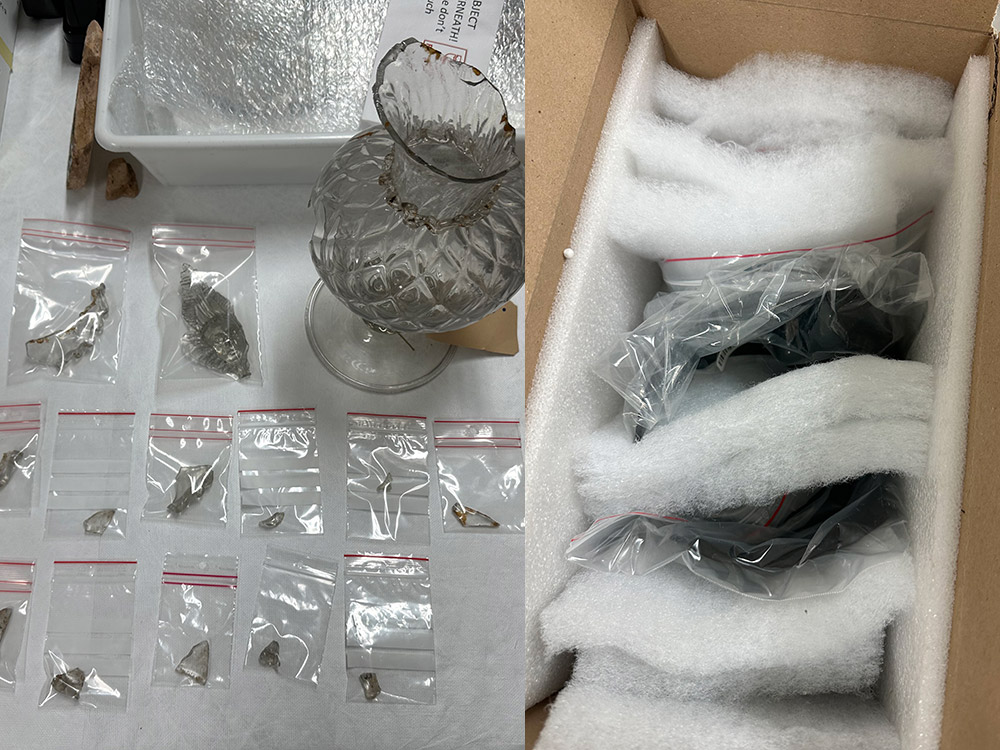
Should an incident cause the glass to break into several pieces, it is important to gather all the fragments, including small splinters. They may have scattered a considerable distance. Put each individual fragment into a small bag or box. Do not use packing materials that can leave fibres or contaminants on the fracture surfaces, and never use adhesive tape to join fragments.
A synthetic material can fill a loss in glass. A conservator can assess the options and draw up a plan for this. Transparency, opacity, colour, texture and other details can be imitated to a limited degree. A fill will never be invisible, but it can have aesthetic benefits or increase stability. Every case is unique, and any proposed treatment is therefore object-specific. Careful diagnostic examination informs which of the many treatment methods and techniques can be used.
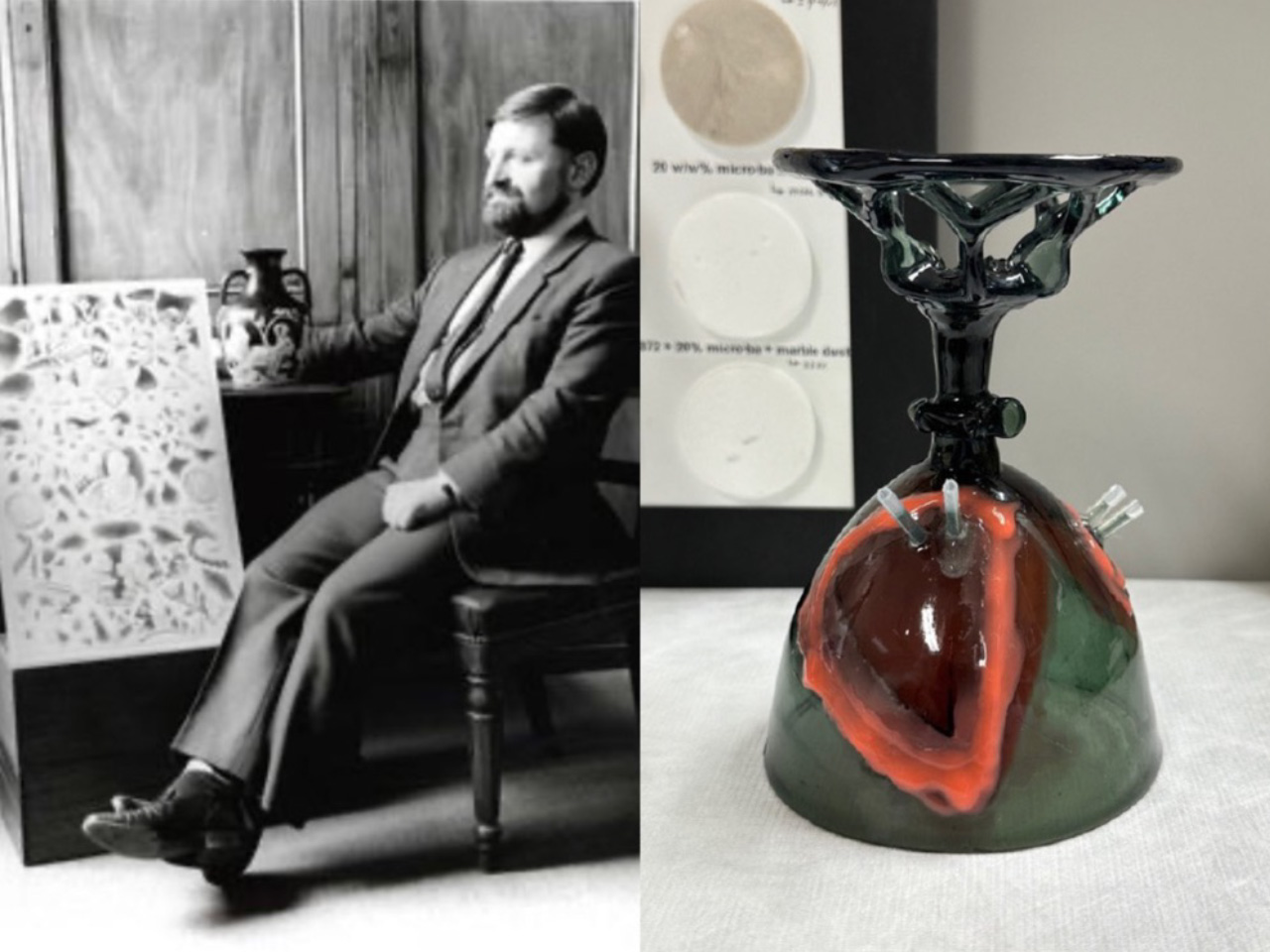
LEFT Nigel Williams, one of the first glass conservators, posing with the Portland Vase from the collection of the British Museum, London, which he restored in 1970. The illustration beside him shows how many fragments the vase had broken into. See also Wikipedia. RIGHT Glass with missing parts and moulds for filling the missing areas with synthetic material. The additional material can be coloured if required. PHOTO M. Slager
Example of a loss that could be filled. Whether this is necessary or desirable and how it should be done depends on many factors. PHOTO M. Slager
A video about the restoration of the Portland Vase and a video about the cameo glass technique used for the Portland Vase
Innovations in glass treatment
Very little research is being conducted into glass conservation treatments. This area could benefit from greater attention.
In recent years, the use of 3D printing techniques to fill losses in glass has received increasing attention.
Green, J. A., Adhering to Artist’s Intent: Developing Diagnostic Strategies for Original Artists’ Adhesives, UvA thesis Master Conservation and Restoration of Cultural Heritage, 2021. Universiteit van Amsterdam, bibliotheek Ooievaar, O., Xu, C., Ooienvaar N., van Lookeren Campagne, K. en M. Slager, Recent Advances in the use of 3D technology in glass conservation: Reconstruction of complex and large areas of loss. ICOM-CC conference Oslo September 2026