conservation
advice & treatment
handling glass
Handling instructions are object-specific. The physical characteristics resulting from the making process and the object’s history determine the best way to handle and move it. Check the object’s condition before handling it.
When handling movable glass objects, follow these guidelines.
— Keep handling to a minimum. Smaller glass objects in good condition can be handled with both hands, wearing nitrile gloves and supporting the object carefully. Glass can scratch or break easily, so do not wear rings or necklaces and never lift objects by their handles or lugs.
— Familiarise yourself with any obstacles along the planned route beforehand. If necessary, move the object in a crate, basket or tray with cushioning on a stable trolley. Use soft inert packing materials and ensure that fragile parts are properly supported.
— Some objects require special handling instructions. They may be heavier than they appear or have moving, loose or protruding parts. Keep such information readily available alongside the object, either on a label placed beside it or a note generated by the documentation system.
— Wear nitrile gloves when handling glass. Take extra care when handling unstable glass with droplet formation because the surface may be slippery. All prospective handlers should be aware or made aware of this condition before handling the object (
General Condition Form).
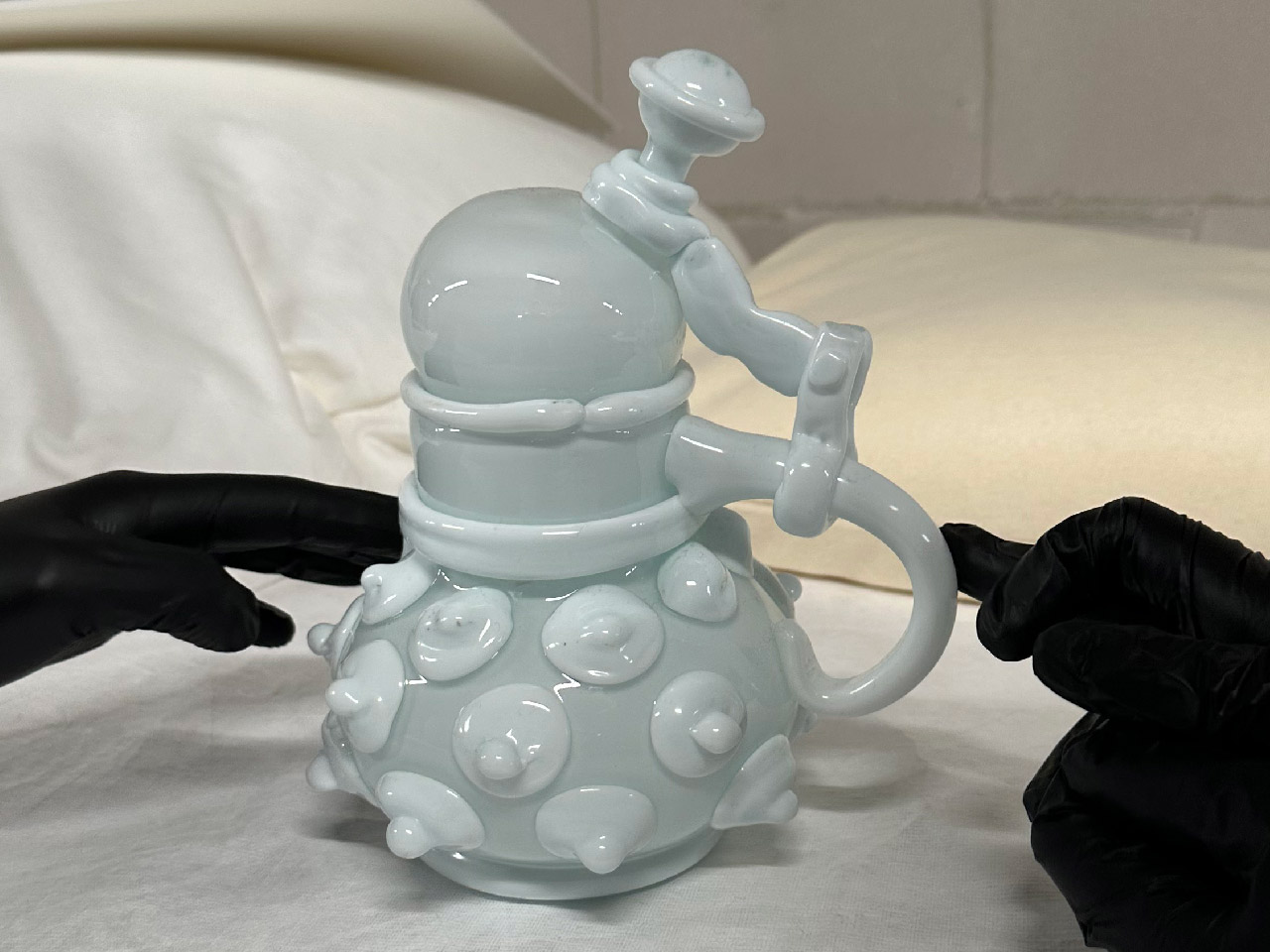
Bernard Heesen, Encyclopedisch gewrocht, 1998
COLLECTION Museum Boijmans Van Beuningen
Before handling the object, feel whether and where it feels slippery. PHOTO M. Slager, 2024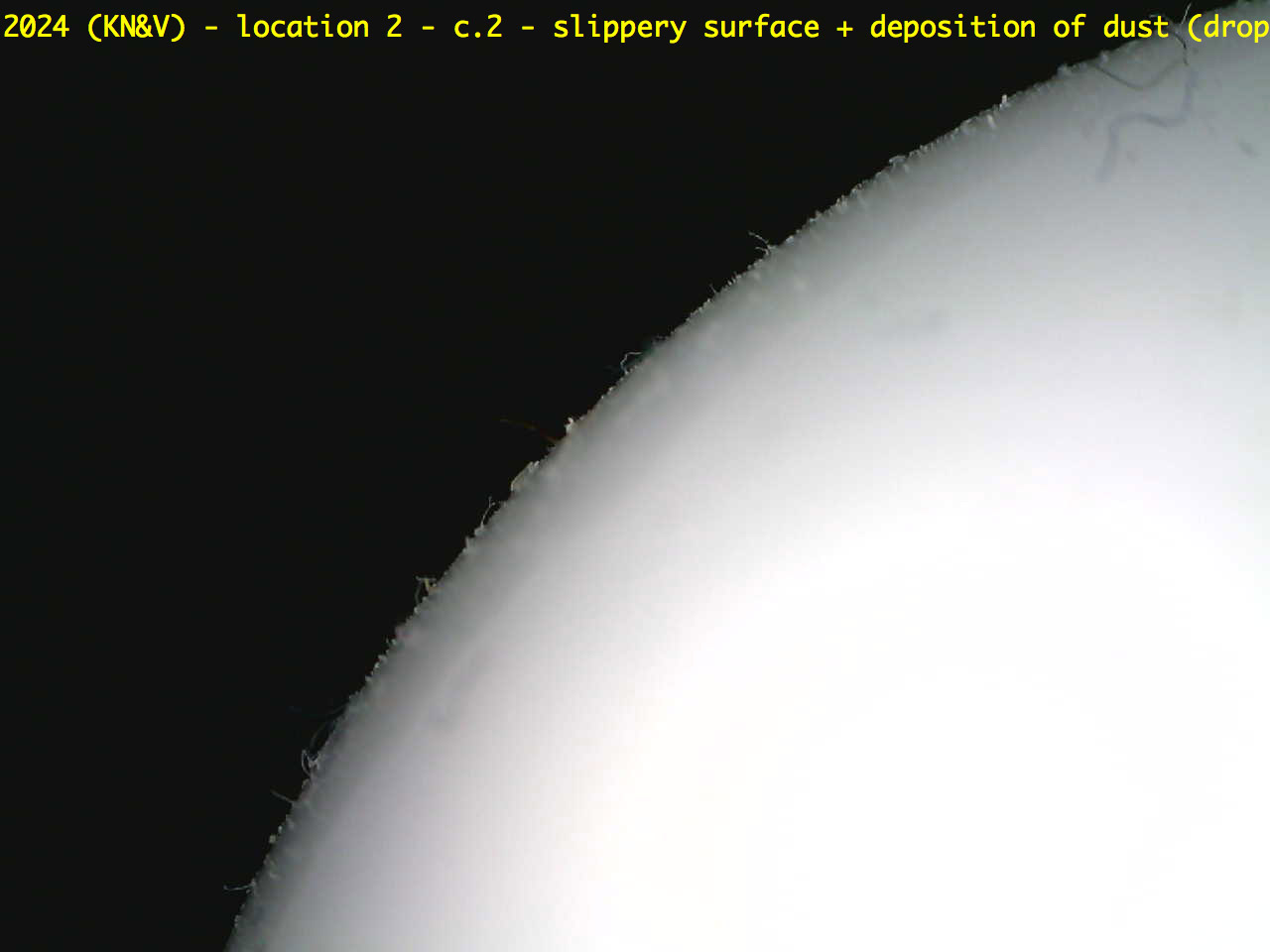
Bernard Heesen, Encyclopedisch gewrocht, 1998
COLLECTION Museum Boijmans Van Beuningen
Droplets on the surface
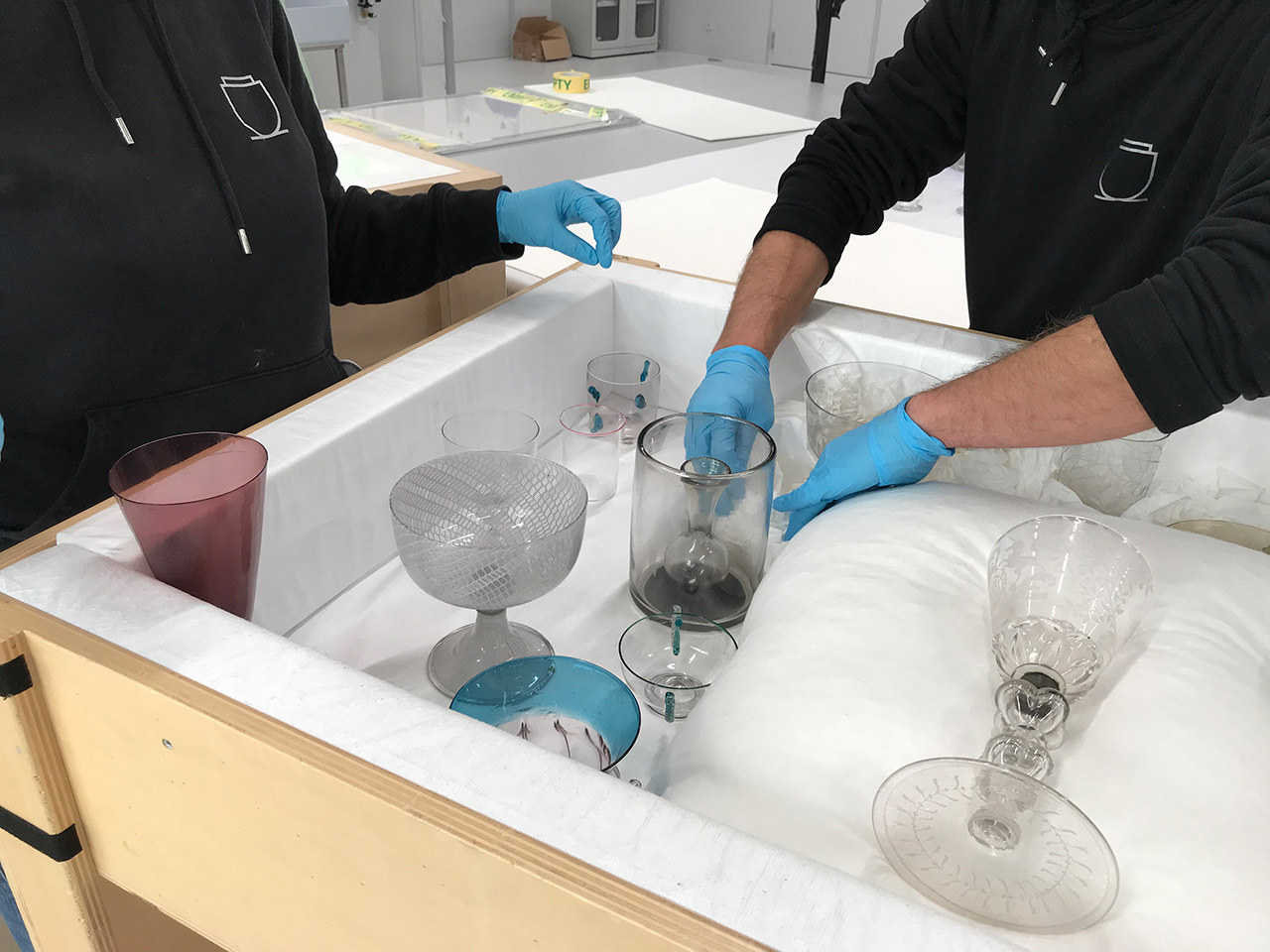 A stable trolley with good suspension and protective internal padding. Each glass object is individually wrapped in soft paper or padding and is sometimes moved lying on a cushion. PHOTO M. Slager
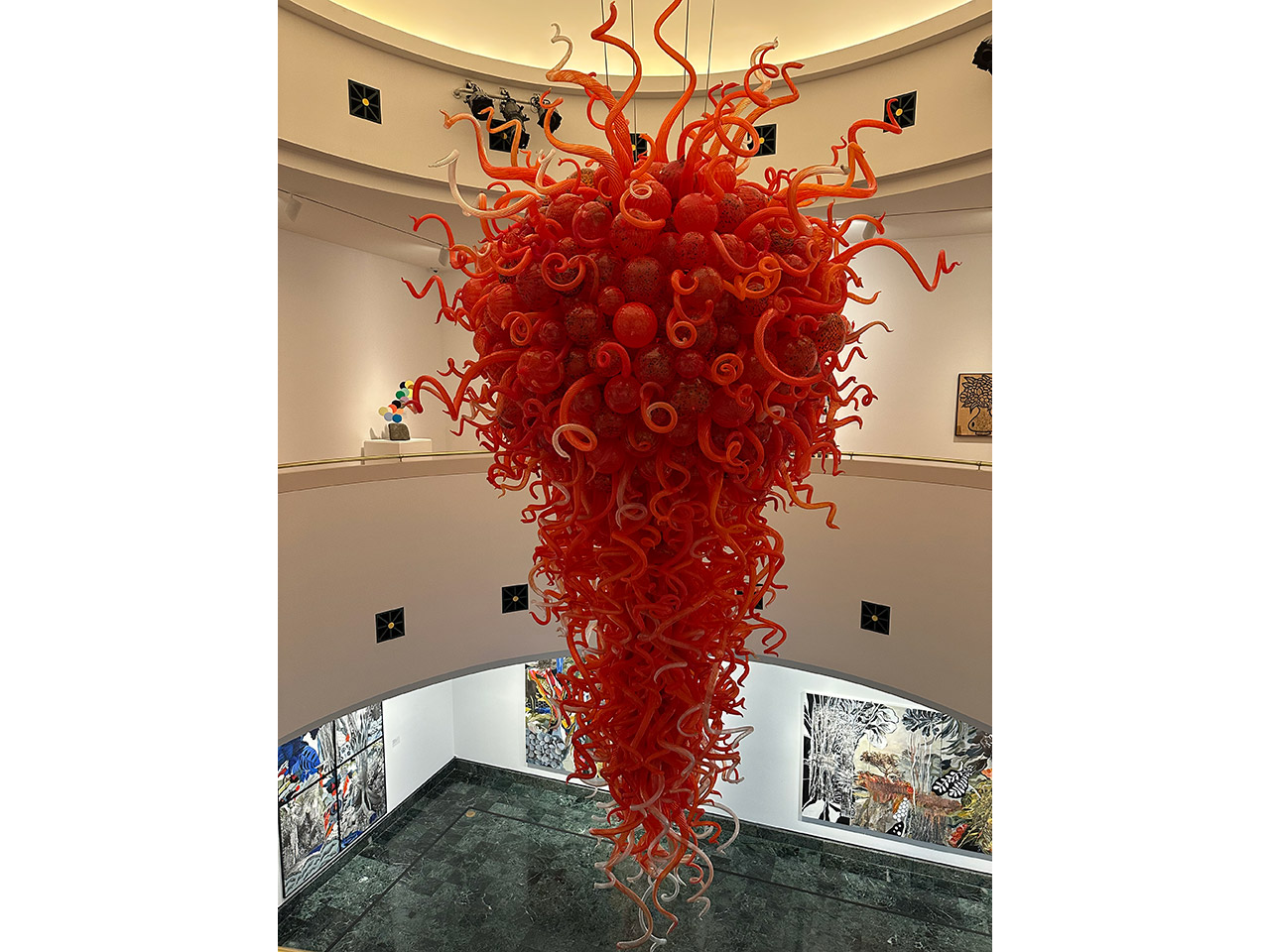 Some glass objects are extremely complex, large and heavy. Tasks such as moving, handling, hanging them and keeping them free of dust require special preparation, inspection and expertise. PHOTO M. Slager
A short video about a large goblet that has undergone a lifetime of movement and handling. Goblet 604 (KN&V). COLLECTION Museum Boijmans Van Beuningen