Tapio Wirkkala, Vase Bolle (model 503-1), 1966-1967
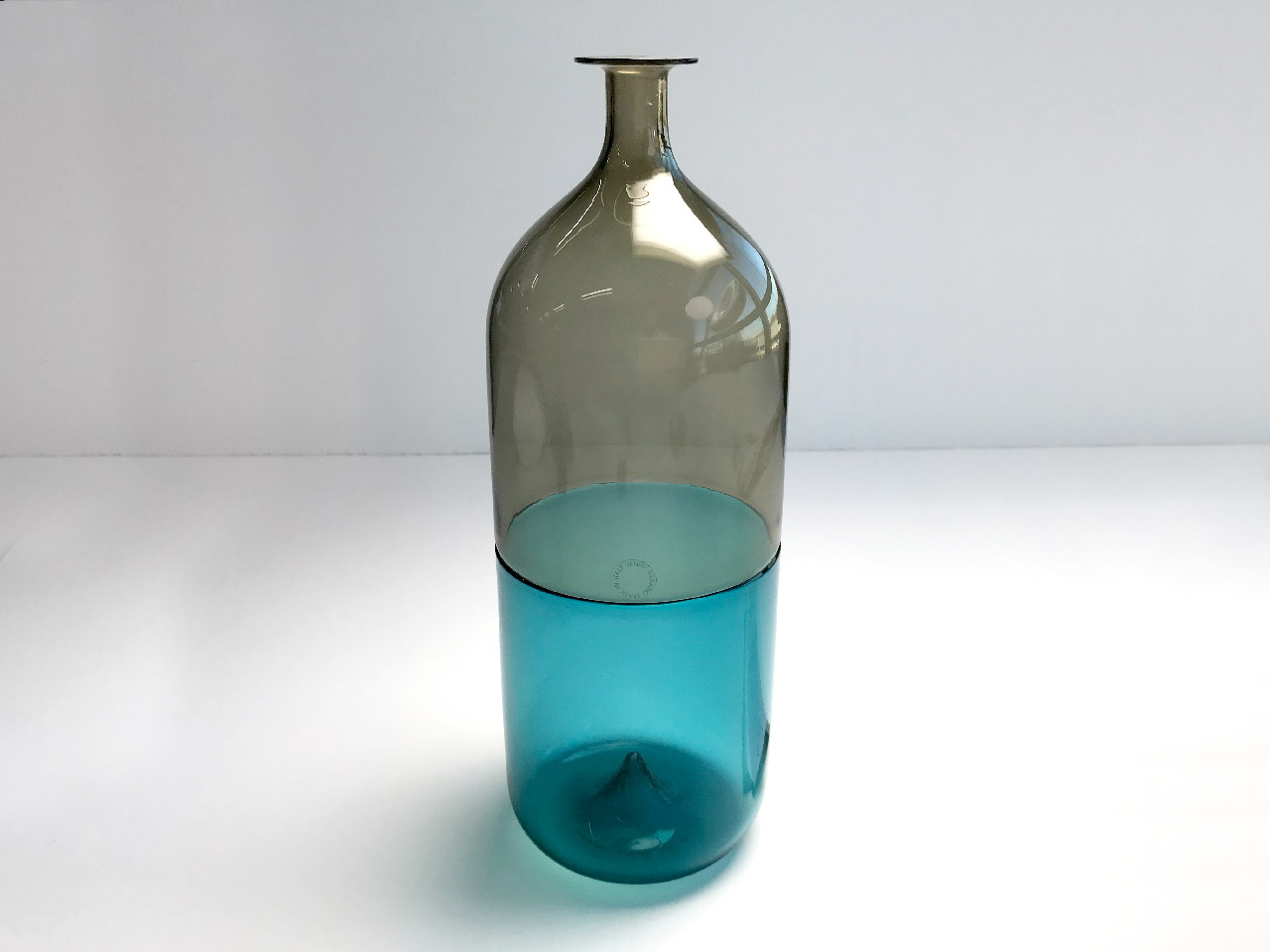
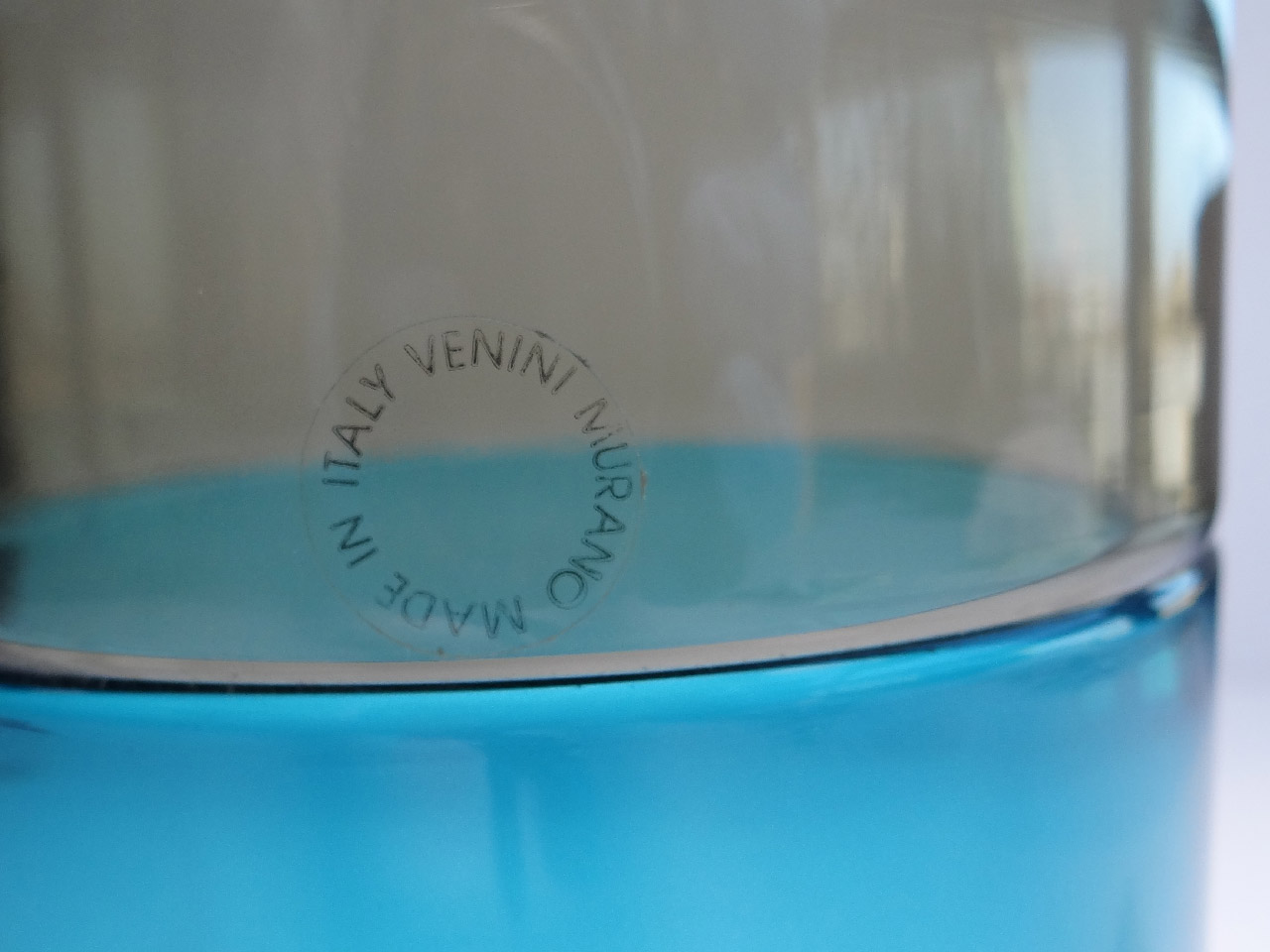
31.5 × 11.5 cm, 2495 (KN&V)
COLLECTION Museum Boijmans Van Beuningen. Gift of Cor de Wit and Sjoukje de Wit-Jelsma.
creation
making process
Material coloured clear glass
Technique free-blown bottle shape with narrow neck
Hot working incalmo
(art) history
The golden age, or golden years, of
Finnish glass lasted from the end of the Second World War until the 1960s, when Finnish glass and its leading designers became internationally renowned. According to glass historian Dan Klein, designers such as
Tapio Wirkkala and Timo Sarpaneva were instrumental in establishing the Finnish glass industry on the international market.
conservation
research & diagnosis
technical analysis
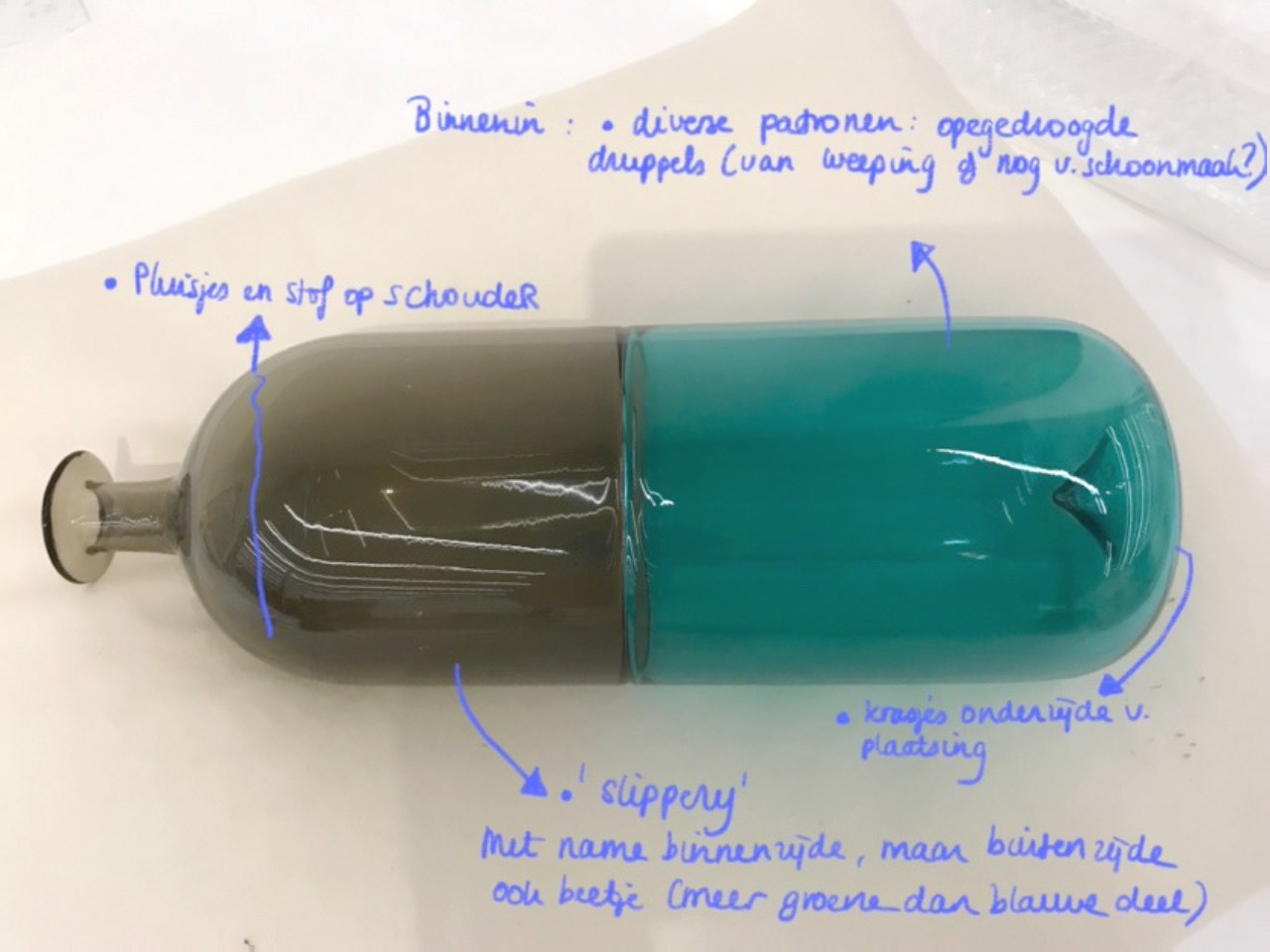
visual examination
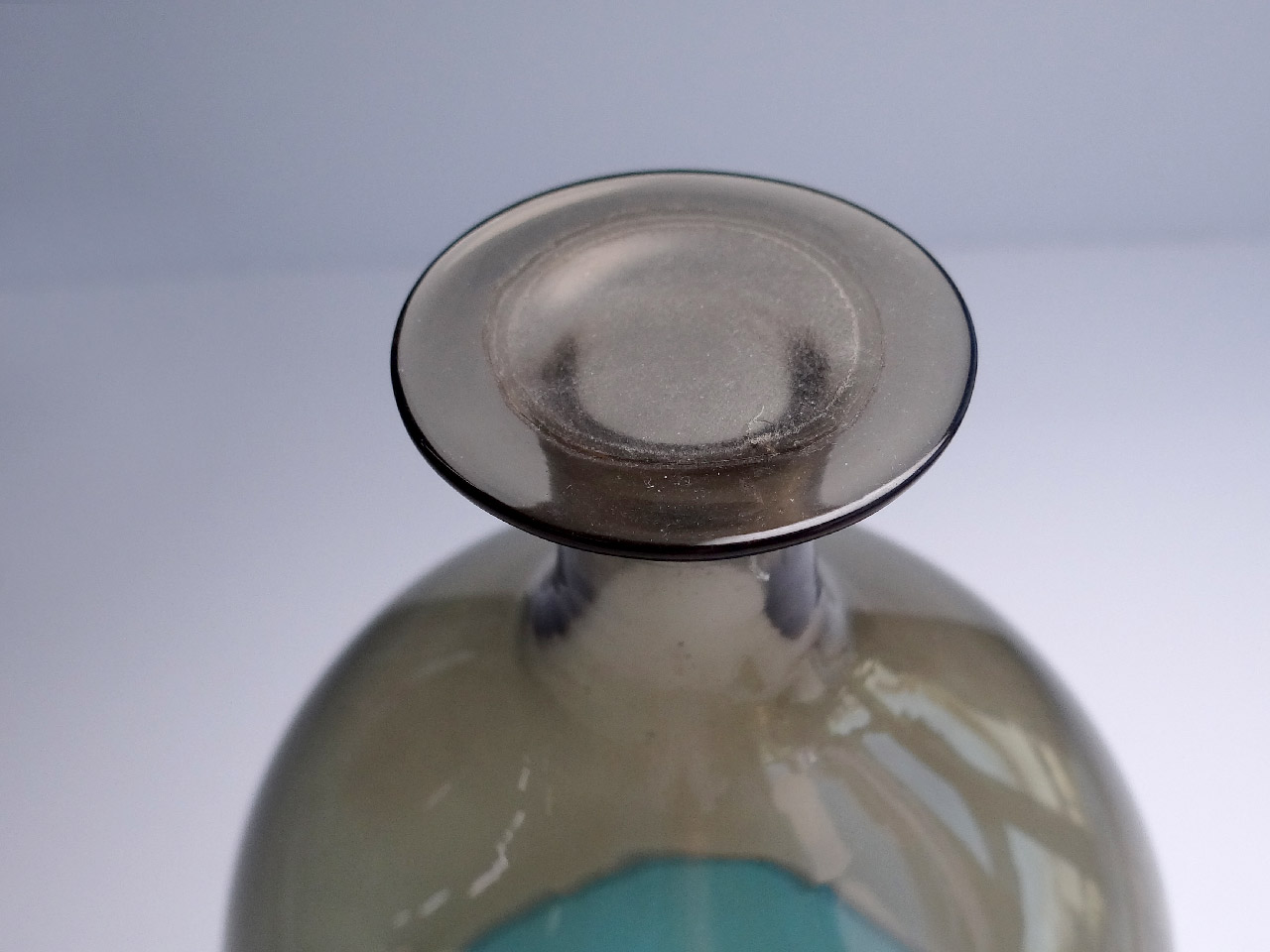
The object is sealed at the top, making it impossible to examine the interior further. An IC analysis was also not carried out.
pXRF analysis of the composition
The grey glass is a soda-lime glass with a high arsenic content. It is coloured grey by small amounts of nickel and zinc. The glass contains little iron and virtually no manganese. The blue glass is of the same type but is coloured with copper and manganese and contains very little chromium.
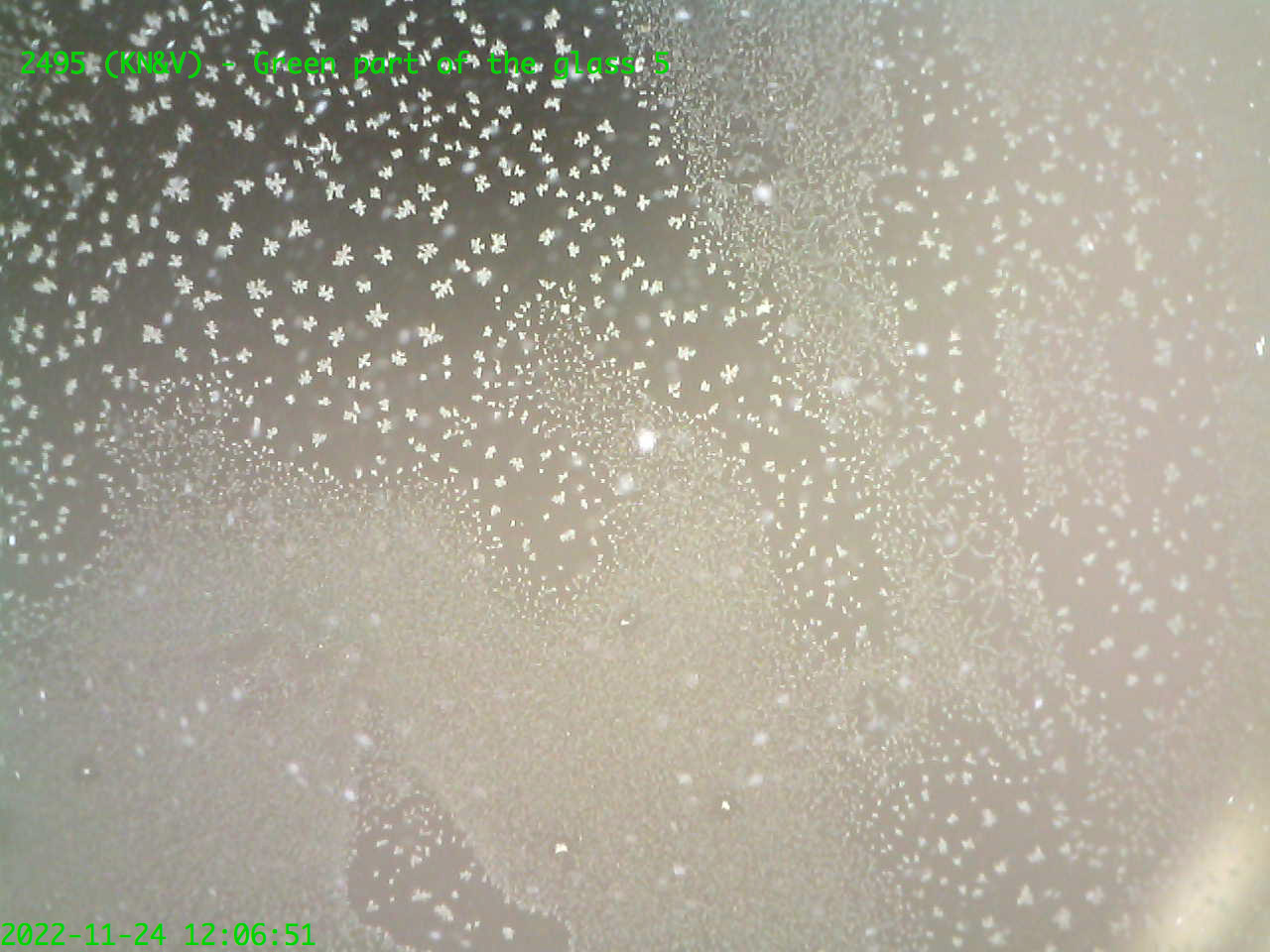
Condition diagnosis
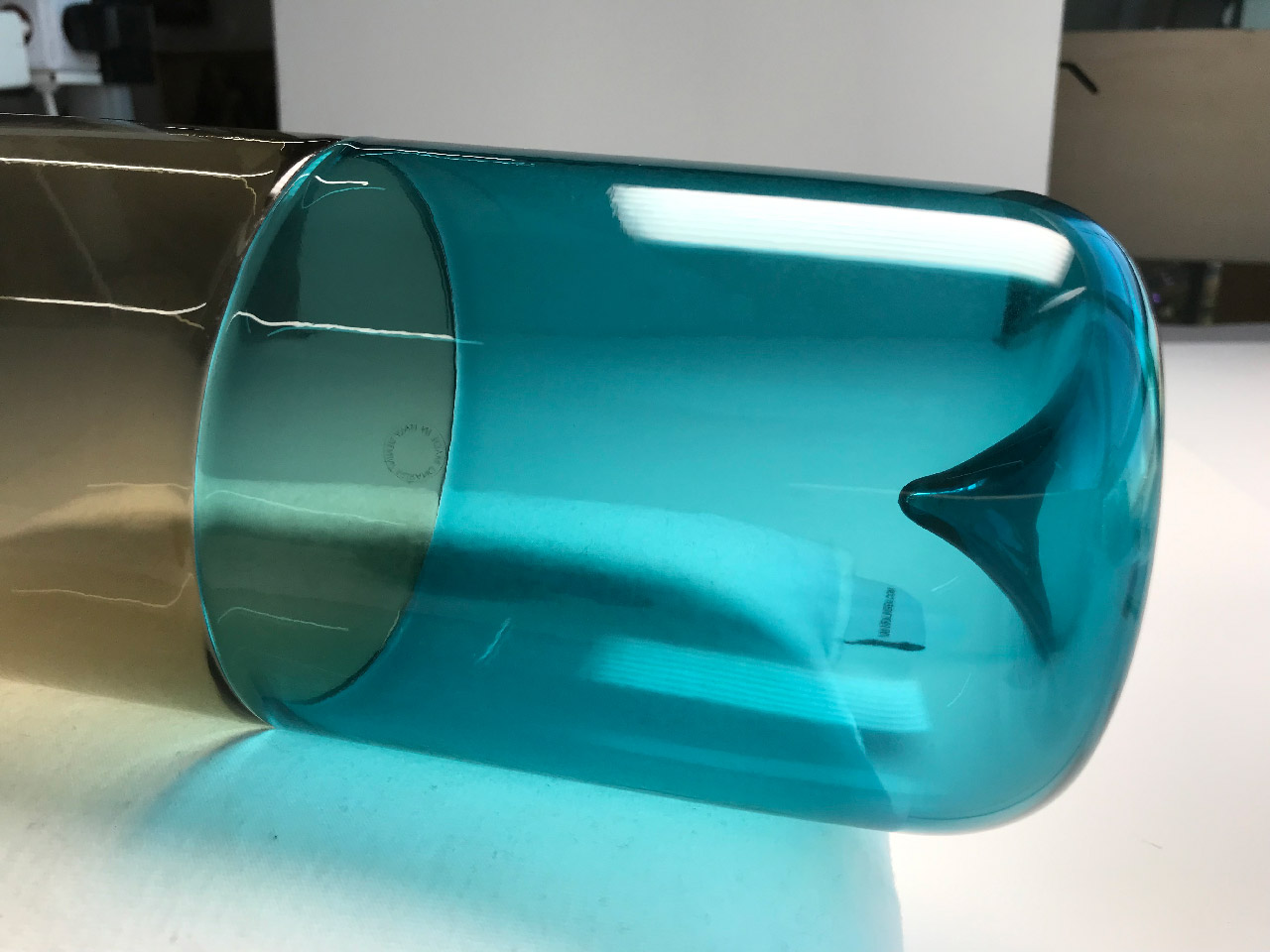
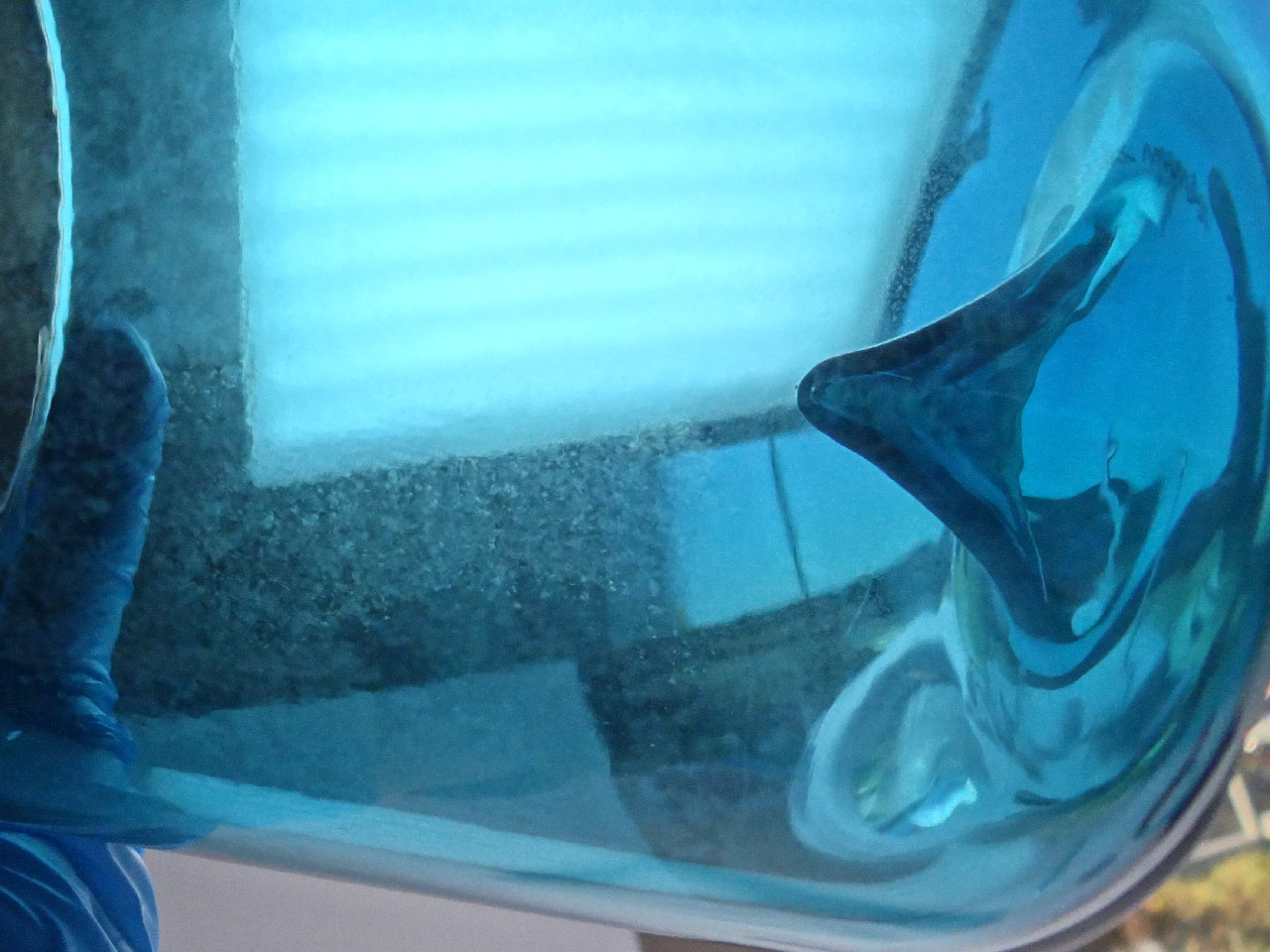
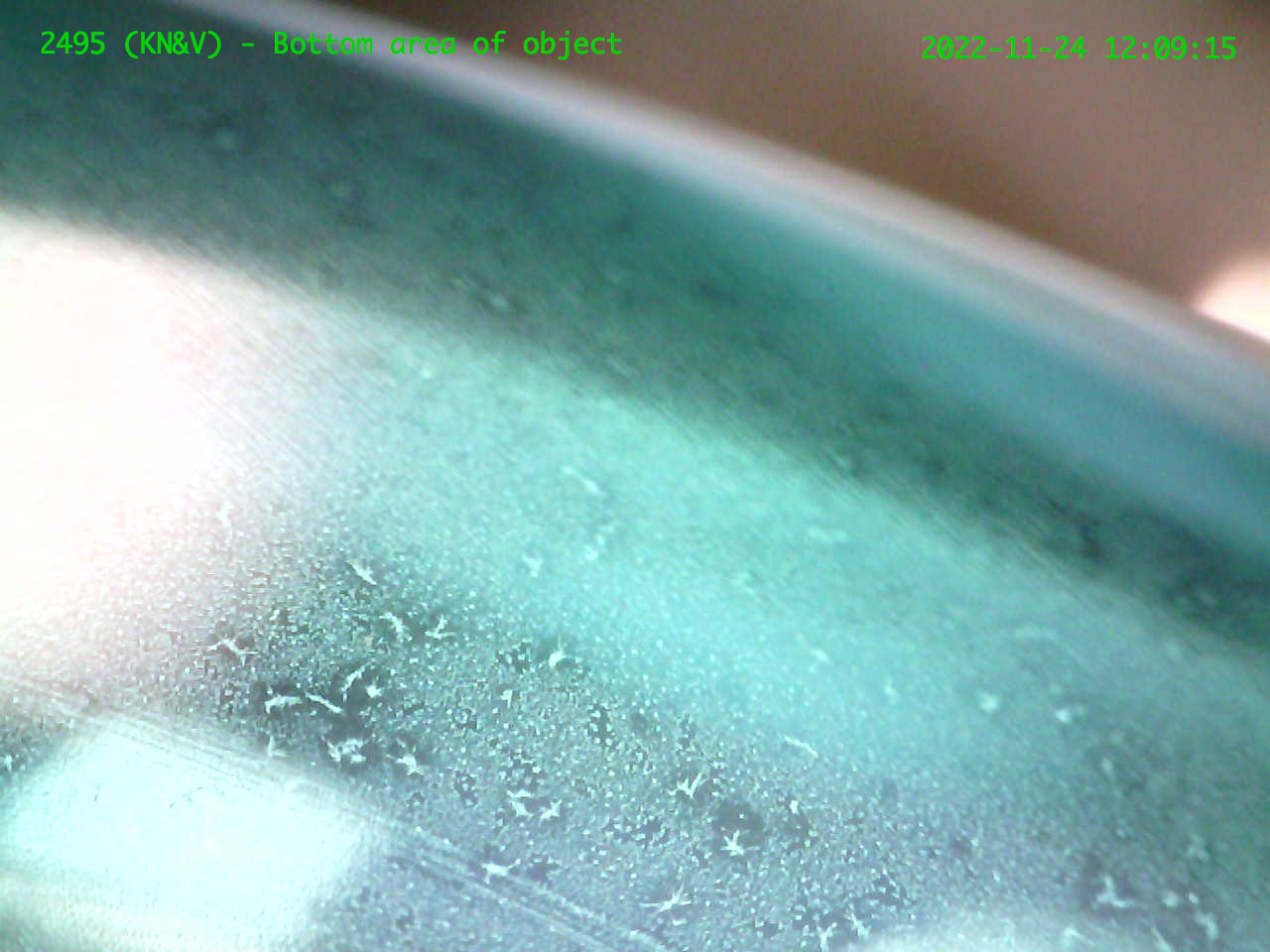
Condition (visual) very poor
(Click on photos to enlarge)
advice & treatment
Suggestions for packaging, handling, storage and transport
Support the object well when moving it and pick it up with both hands. Always wear nitrile gloves when handling.
Keep the object in a separate cabinet with other unstable glass. Ensure the object is positioned so that its condition can be easily monitored and that it is readily accessible for inspection.
Suggestions for monitoring the environment and climate
Place the object in a stable environment with minimal fluctuations in relative humidity and temperature. It is highly advisable to monitor both the condition of the object and the climatic conditions regularly to detect changes at an early stage and to analyse any links with the environmental conditions. The object cannot be loaned.
Suggestions for treatment
Cleaning the object is advisable because droplets on the surface contribute to further degradation.
In this case, the plastic seal at the top would have to be removed. Whether this is possible or desirable needs to be assessed. Special sleeves would be required to clean the object properly. The cleaning techniques would need to take the bottle form of the object into account.
Only a glass conservator can determine whether cleaning is desirable and feasible, which cleaning method to use and how to closely monitor the condition. If undertaken, only a glass conservator should clean the glass.
Suggestions for further research
Further research into glass instability, particularly in relation to cleaning, and into the storage of unstable glass is urgently needed.
×
The object is sealed at the top. Examining the interior further was therefore not possible. No IC analysis was carried out.