the finnish glass industry
The golden age, or golden years, of Finnish glass lasted from the end of the Second World War until the 1960s, when Finnish glass and its leading designers became internationally renowned. According to glass historian Dan Klein, designers such as Tapio Wirkkala and Timo Sarpaneva were instrumental in establishing the Finnish glass industry on the international market.
An exhibition of Swedish design, shown in cities across Sweden and Finland in 1923 and 1924, played an important role in the development of Finnish design glass. The prohibition of alcohol posed a challenge for the Finnish glass industry, but once lifted in 1932, demand for glassware grew. Import restrictions during the interwar period led to the domestic production of goods that had previously been imported.
Design competitions brought to prominence a new generation of Finnish designers who, rather than copying international designs, increasingly developed a distinctive Finnish identity. Klein notes that Finnish designers combined respect for the material with quality, technical skill and craftsmanship. He also observes that Finnish glass often drew inspiration from nature, featured clean lines, and used colour in a subtle yet vibrant way.
Iittala remains a well-known glass manufacturer. Its glassworks opened in Finland in 1881 and mainly produces glassware and tableware, with a strong design focus. It has often collaborated with designers, including Tapio Wirkkala, Alvar Aalto and Oiva Toikka.
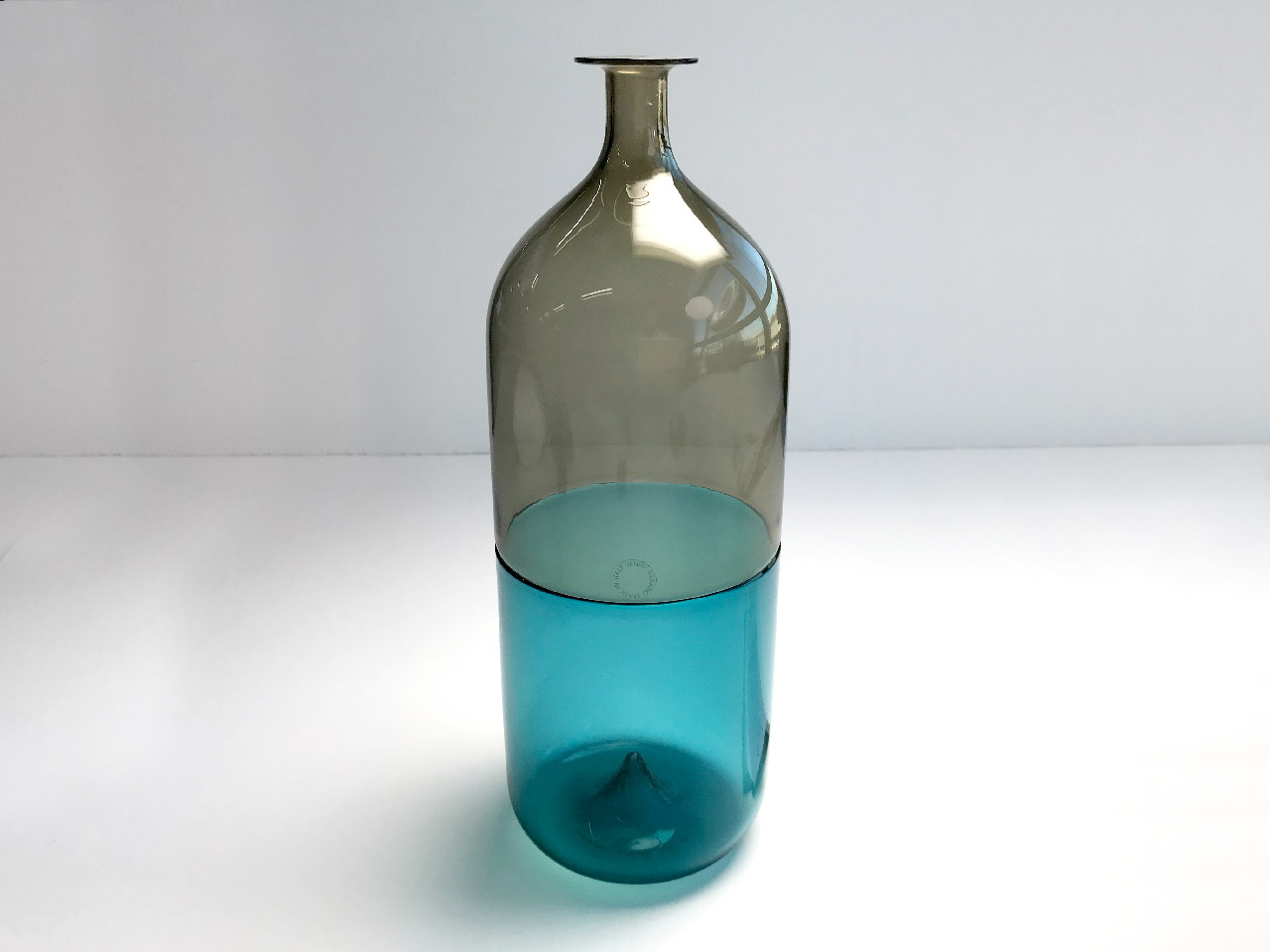
Tapio Wirkkala, Vase Bolle (model 503-1), 1966-1967