conservation
research & diagnosis
vulnerabilities in glass
atmospheric degradation
misleading characteristics
When studying the condition of glass, in-depth technical knowledge of the material is just as important as an understanding of degradation processes. Collaboration with glassmakers is therefore essential. The following examples show how it can help in the study of unstable glass and demonstrate how features of the making process can sometimes be mistaken for signs of degradation.
The Museum Boijmans Van Beuningen – Glasproject involved collaboration with Marc Barreda, Durk Valkema and Anna Carlgren.
stain patterns
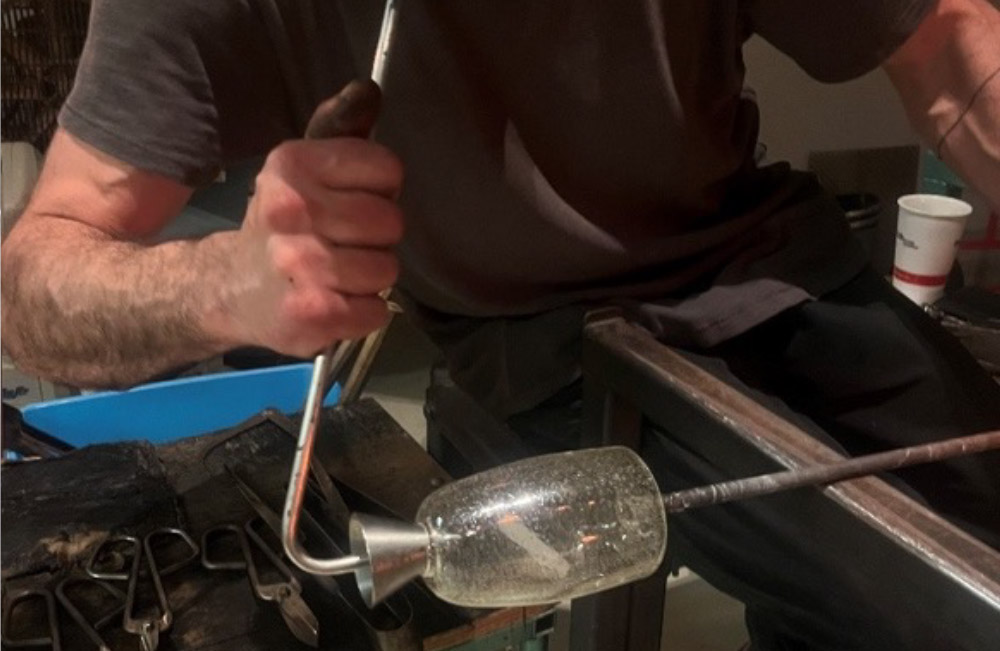
Wax can be used during glassmaking to help tools glide more easily over the glass. Wax spatters on the object can form stains that in some cases closely resemble those found on unstable glass.
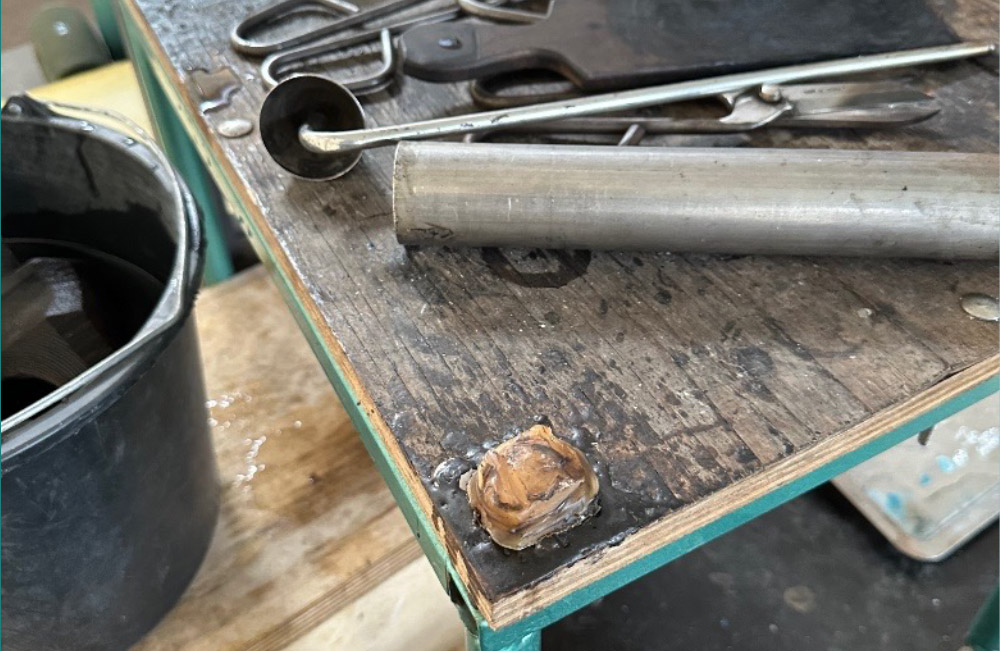 Wax on the corner of the bench, used to lubricate tools during the glassmaking process.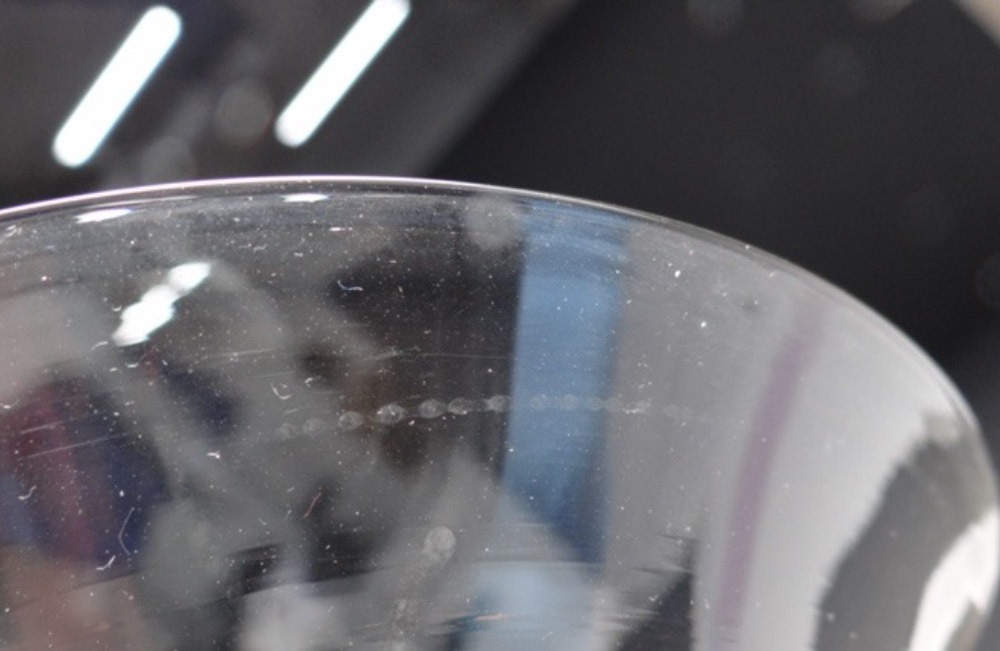
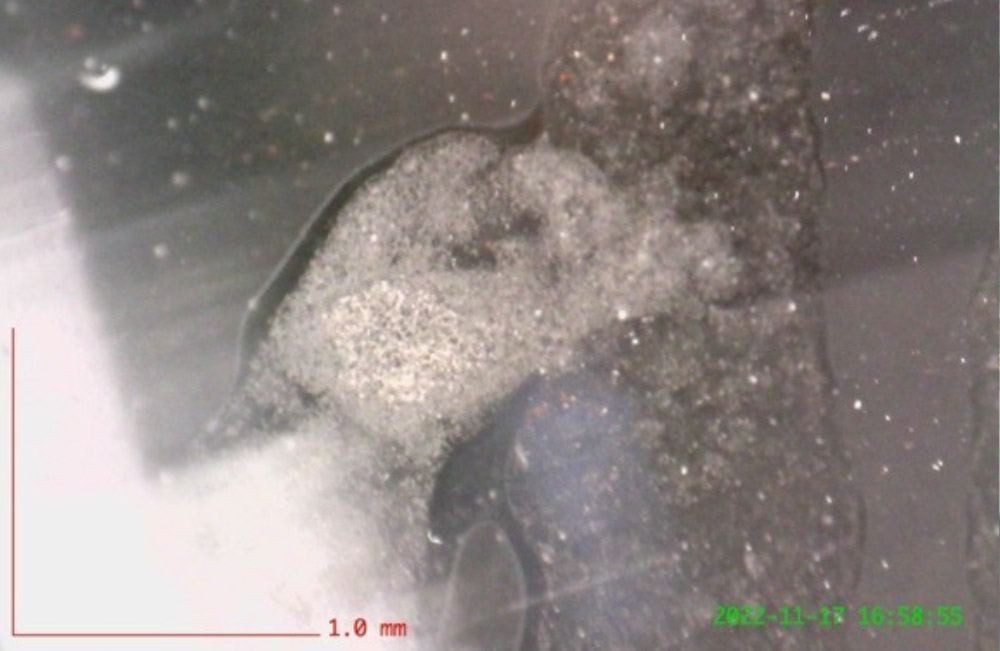 Stains caused by wax splatters. Distinct droplets and other marks that have fused into the glass surface.
dulling
Dulling can result from reactions that have occurred within the archaeological context of the object. Although these chemical processes are related to those involved in atmospheric degradation caused by glass instability, they are not the same. Once excavated, the glass is often no longer susceptible to moisture from the air in the same way, and there is usually little risk of further deterioration. Past cleaning can also cause dulling. In isolated cases, objects have even been intentionally made to look dull to make them appear older.
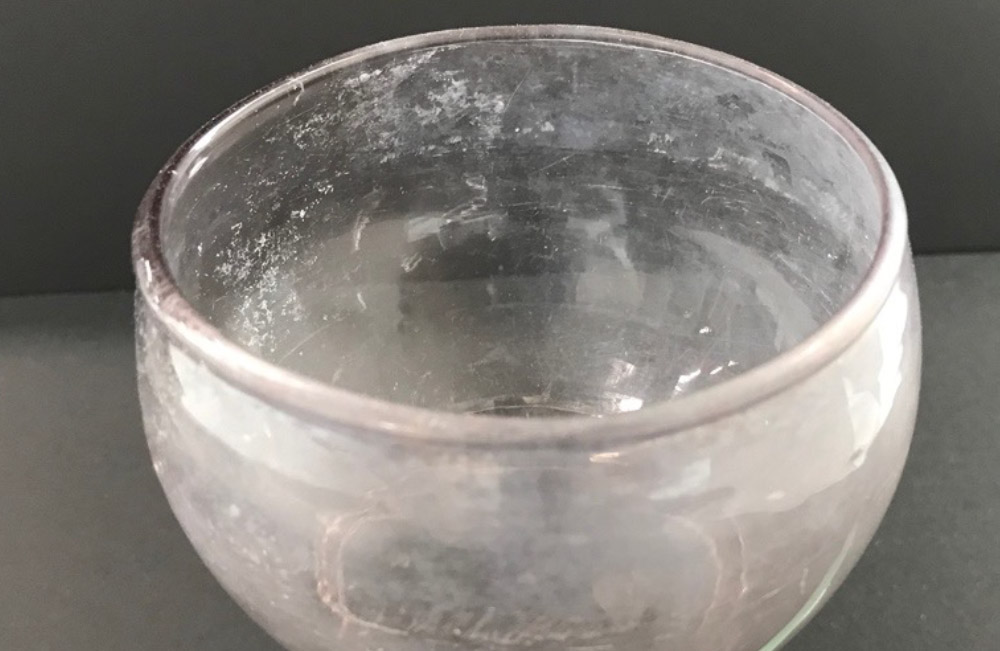 1142 (KN&V) COLLECTION Museum Boijmans Van Beuningen
Crack formations
Crack formations can closely resemble crizzling (see atmospheric degradation) but are actually part of the making process.
More on crack formation:
fractography.
Example: Horn
In this example, the rapid cooling of the glass during the making process has caused cracks. This was done intentionally to achieve the horn-shaped form of the glass. By combining analytical techniques such as ion chromatography, pXRF, and fractography, such physical characteristics can be placed in context. By documenting the crack pattern, including its course and point of origin, the cause can be determined and the pattern monitored over time. These crack patterns are related to the rapid cooling of the rim in cold water during manufacture.
Costello, T., Diagnostic Investigation into a Cracking Phenomenon on the Mouthpiece of Seventienth-Eighteenth Century Glass Horns, MA thesis 2021, University of Amsterdam
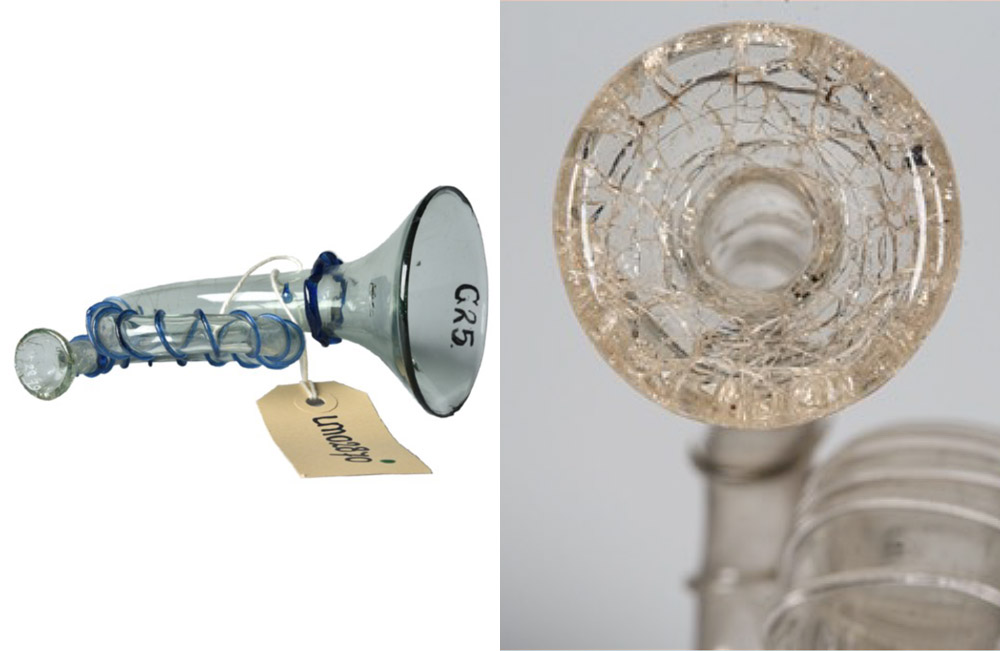 Object COLLECTION Cultural Heritage Agency of the Netherlands (RCE). Mouthpiece with numerous cracks. PHOTO T. Costello
Examination of cracks in the mouthpiece of a 17th or 18th-century glass horn. © Marc Barreda and Mandy Slager.
Object COLLECTION Cultural Heritage Agency of the Netherlands (RCE). Mouthpiece with numerous cracks. PHOTO T. Costello
Examination of cracks in the mouthpiece of a 17th or 18th-century glass horn. © Marc Barreda and Mandy Slager.
Example: VaseThe maker intended to create a glass surface consisting of meandering cracks.
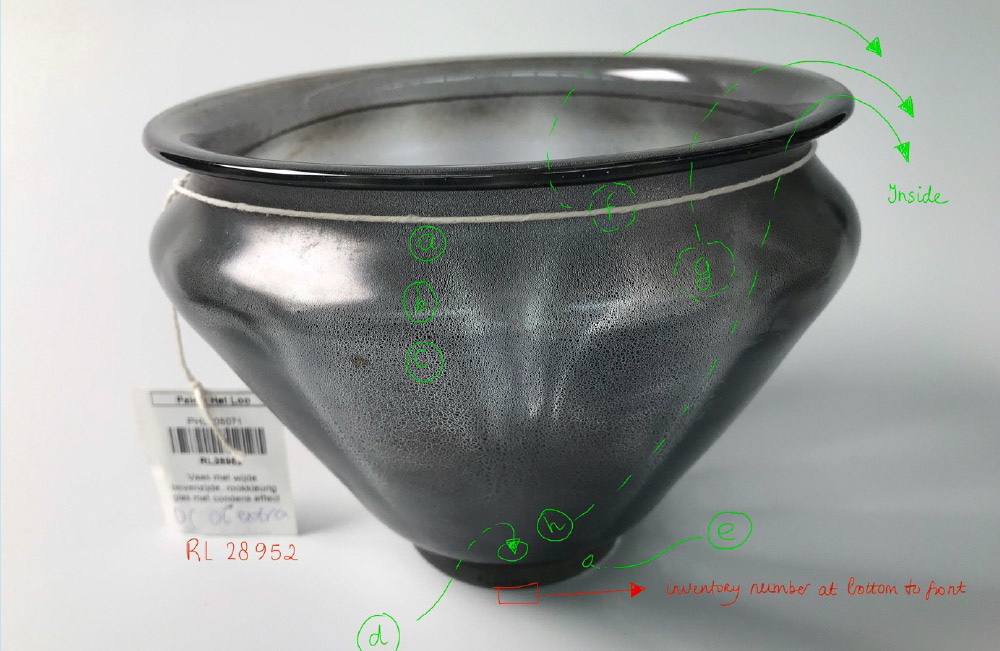
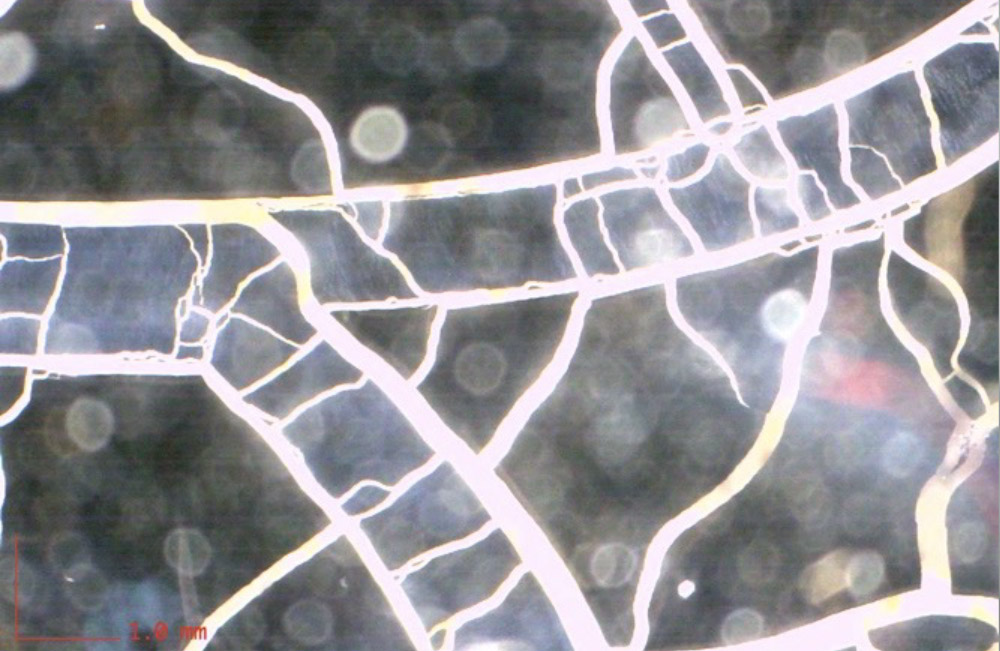 Vase, collection Museum Paleis Het Loo. The pattern of cracks is part of the making process and an intended aesthetic feature of the object.
iron inclusions
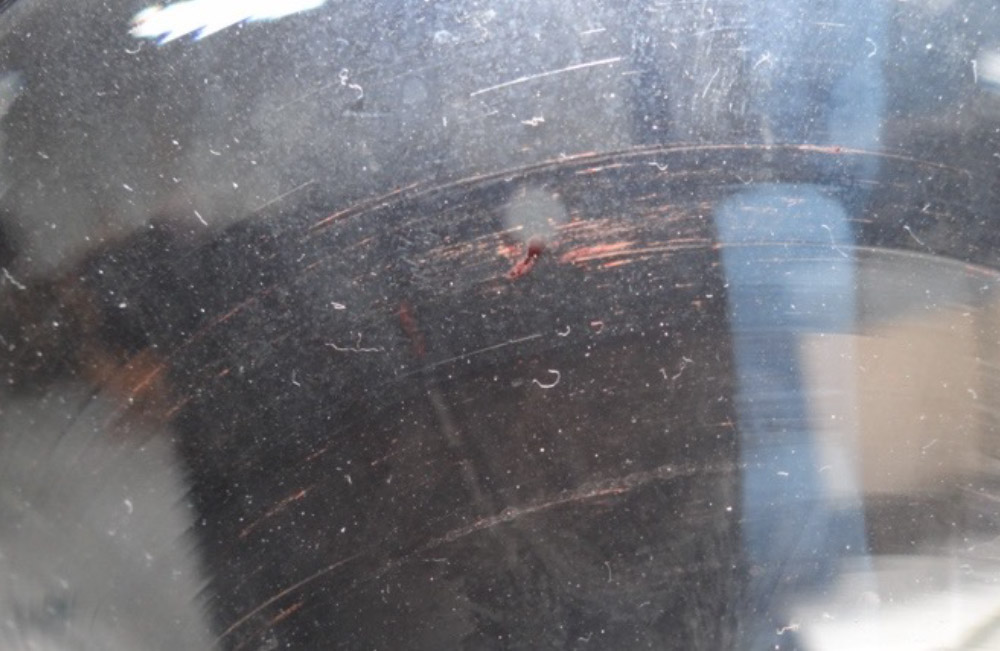
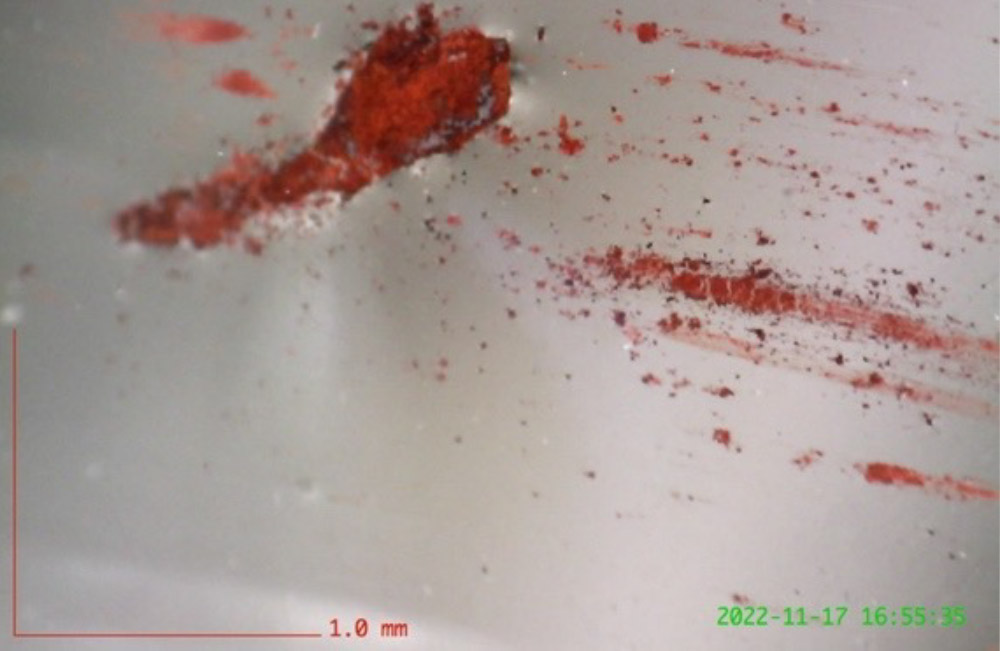
Sometimes small fragments of iron break off from the blowpipe, a condition sometimes referred to as ‘scaley pipe’, and end up inside the glass object. These minute pieces of iron are not always immediately visible to the naked eye and, in some cases, can only be detected under a microscope. Due to the reflective properties of the glass, these tiny red specks can give the object as a whole a reddish-pink glow. Dutch glass conservators refer to this condition as ‘pink glow’ (
roze gloed).
cords
Certain patterns that become visible under special lighting closely resemble cracks. Distinguishing between cords and cracks can be particularly difficult in glass where the cords and cracks run in the same direction. See
making process - composition - streaks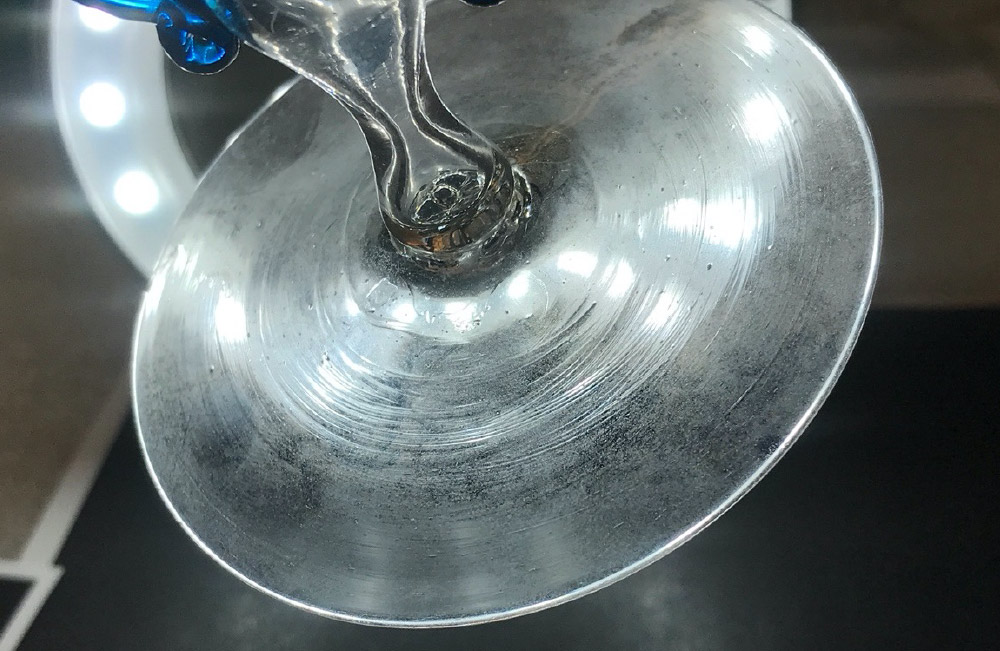 Cords on the base of a stemmed glass
sources / further reading
Burghout, F. en Slager M.,
Cloudy Patches and Misty Glass: Early Signs of Glass Disease? In: Roemich H. and K. van Lookeren Campagne (eds.) Recent Advances in Glass, Stained-Glass and Ceramics Conservation, Amsterdam, the Netherlands, 7-10 October 2013, pp. 327-329
Museum Boijmans Van Beuningen,
Research glass collection boijmans.nlCostello, T.,
Diagnostic Investigation into a Cracking Phenomenon on the Mouthpiece of Seventienth-Eighteenth Century Glass Horns, MA thesis 2021, University of Amsterdam