unknown, winged glass, 1600 - 1625
.jpg)
28.4 × 10.9 cm, 740 (KN&V)
COLLECTION Museum Boijmans Van Beuningen
creation
making process
Material colourless and coloured clear glass
Technique à la façon de Venise, snake glassHot working optic blown patterns, appliqué, assembled from separately hot-worked components.
Blown on the blowpipe, transferred to a
pontil, then opened and shaped by hand.
(art) history
In the Venetian lagoon, the city of Venice became an important centre of glass production, attracting glassblowers who shared formulas and developed new techniques. The glassblowers' guild was also established there. From the late 13th century onwards, glassblowers were permitted to work only on the neighbouring island of Murano because Venice was built on wooden piles and highly vulnerable to fire. Venetian glass was enormously popular, and the city guarded its formulas jealously. Foreign glassblowers were unwelcome, and Venetian glassblowers who left risked punishment. Nevertheless, glassmakers elsewhere attempted to replicate it, producing what became known as à la façon de Venise, French for ‘in the style of Venice’.
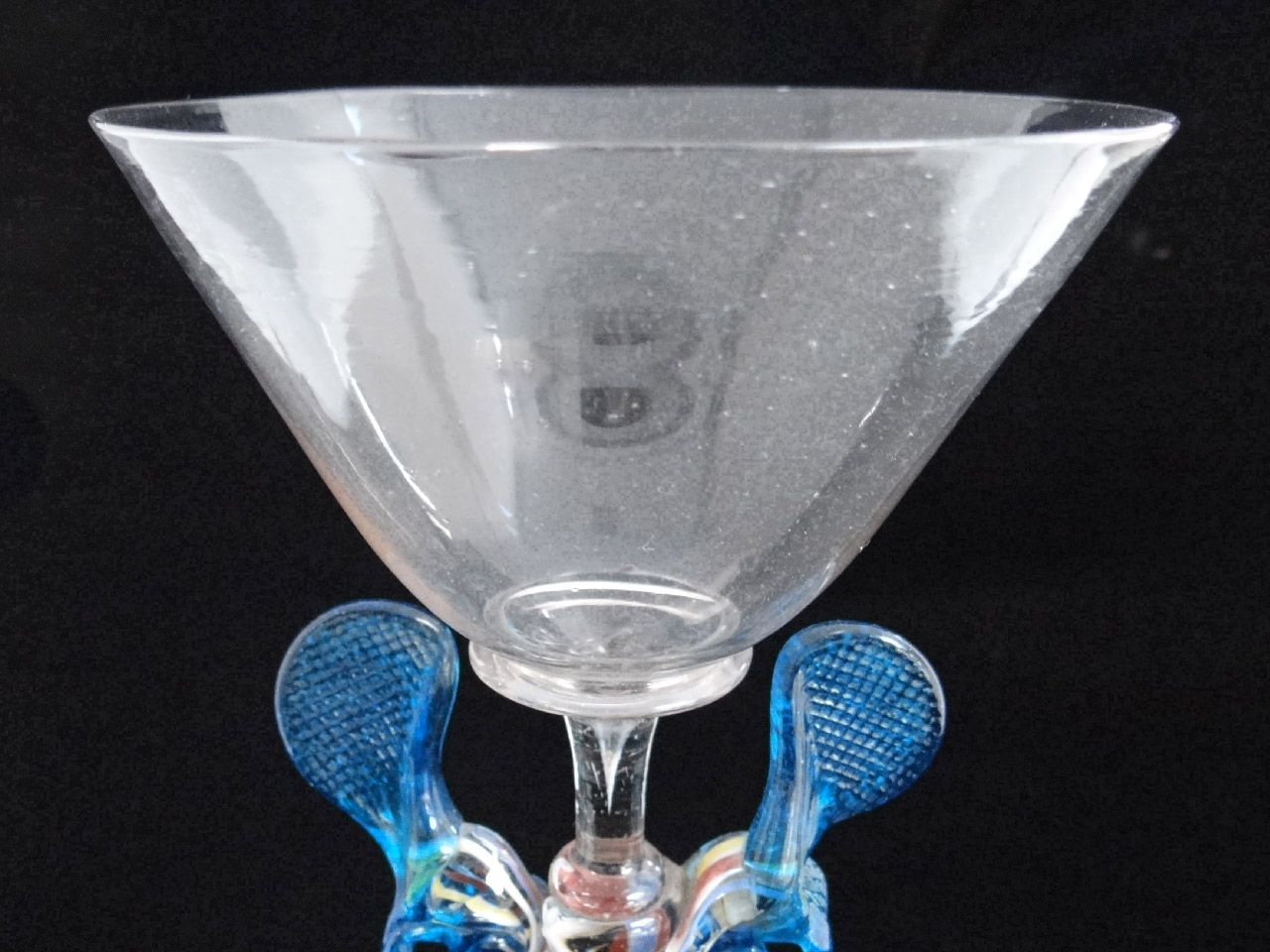
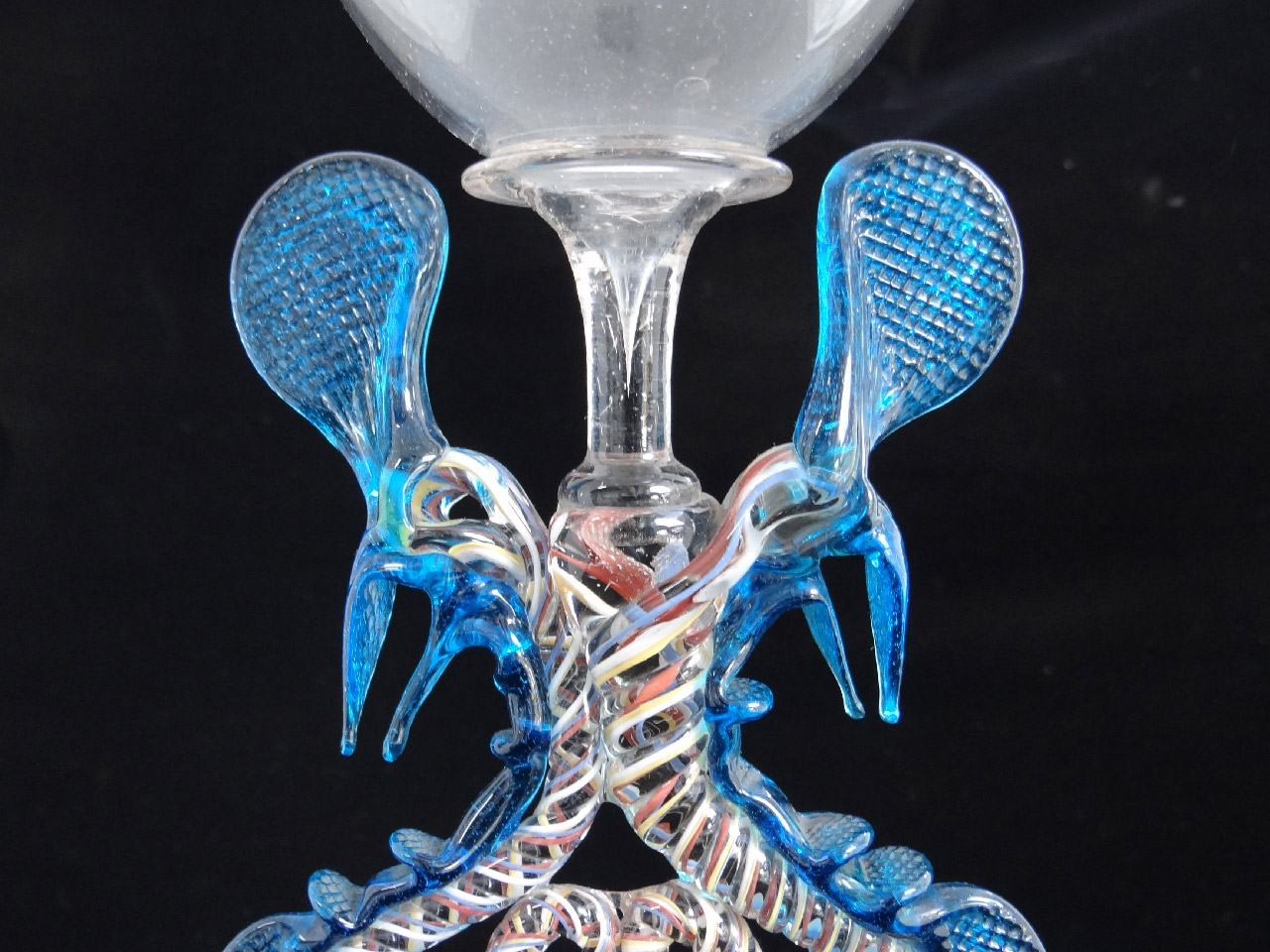
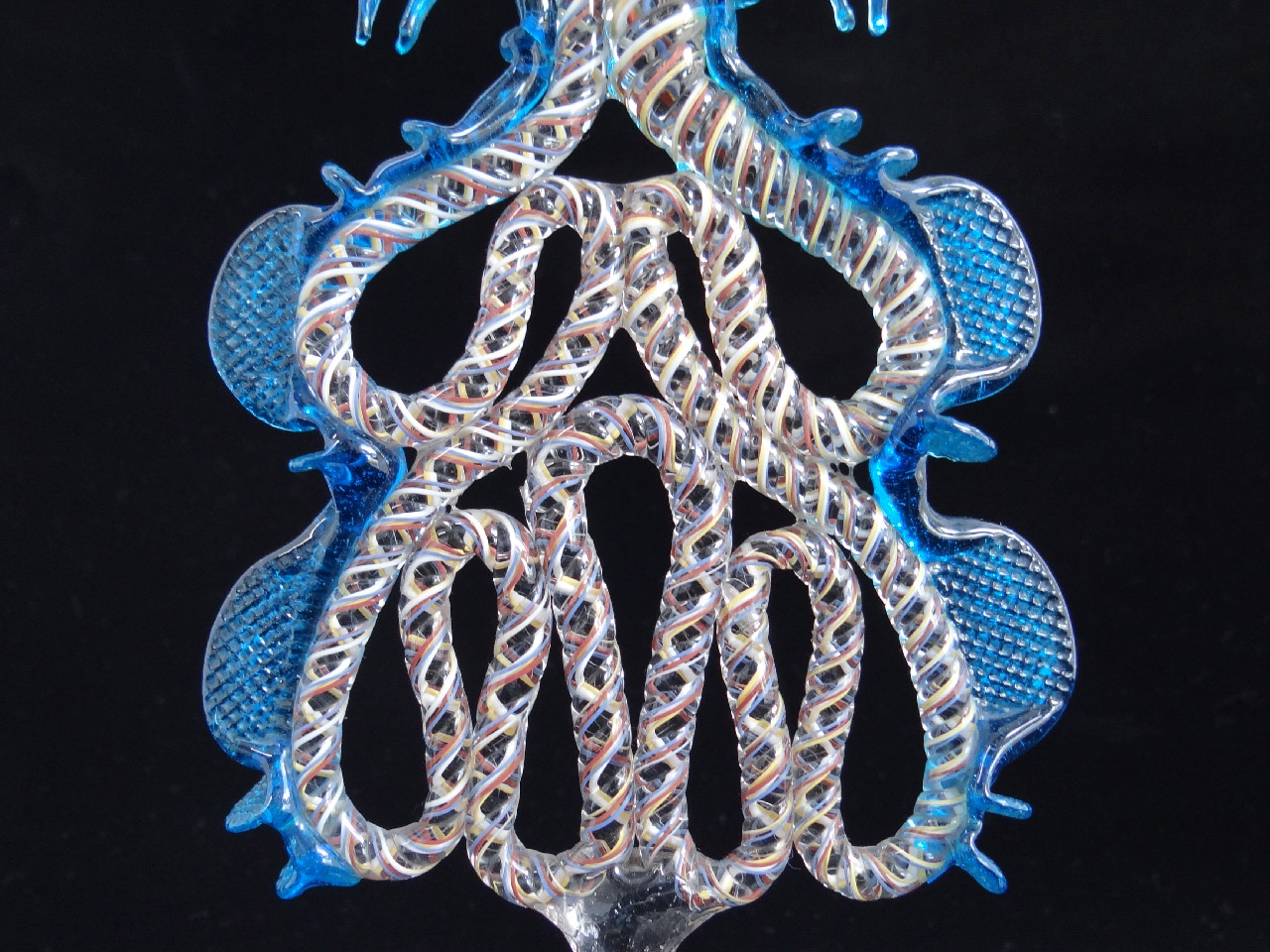
This example of a winged glass is called a snake glass, or verre à serpents. This type of glass originated in Murano in the 16th century and was also produced elsewhere in Europe during the 17th century.
conservation
research & diagnosis
technical analysis
visual examination
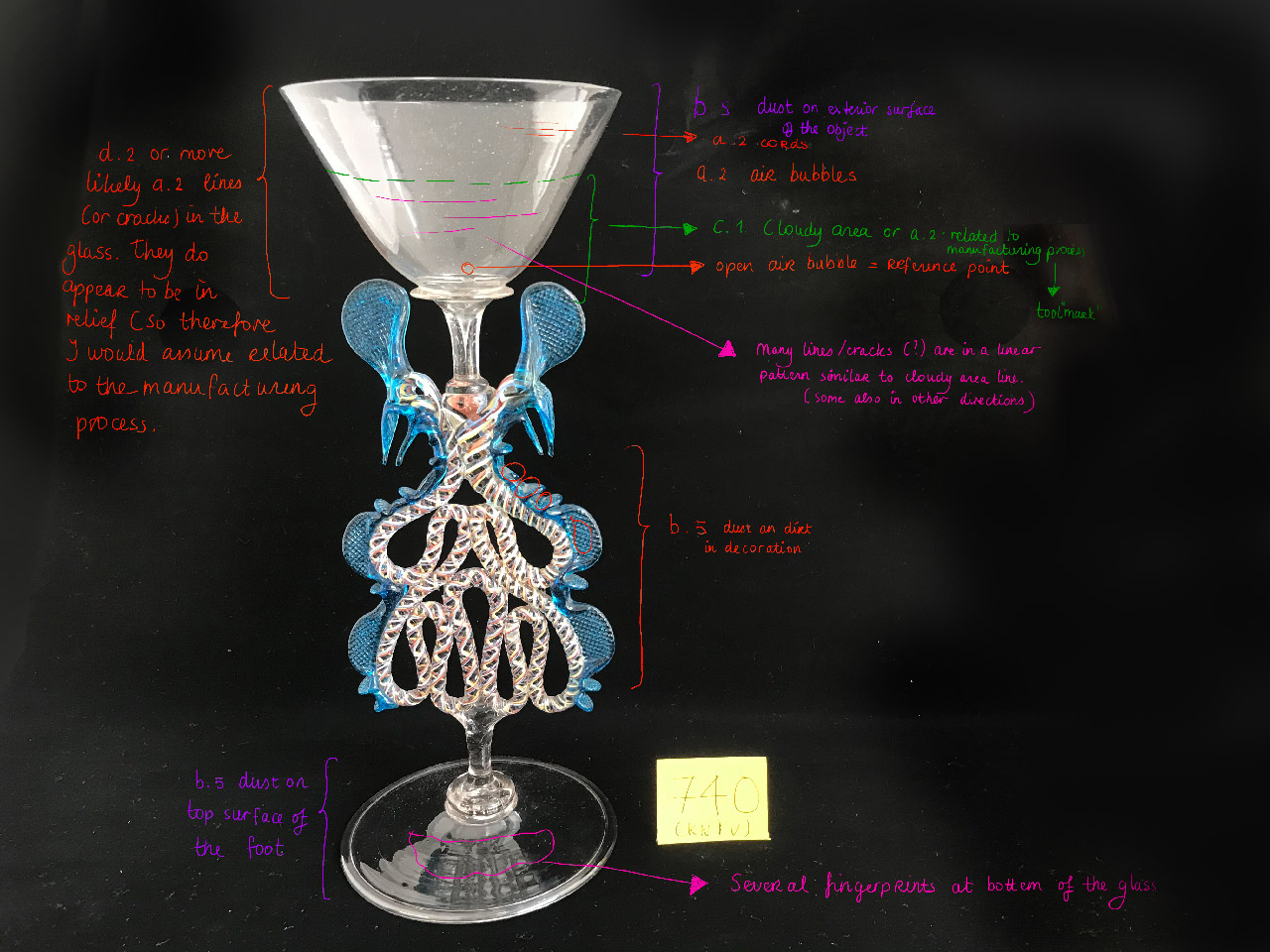
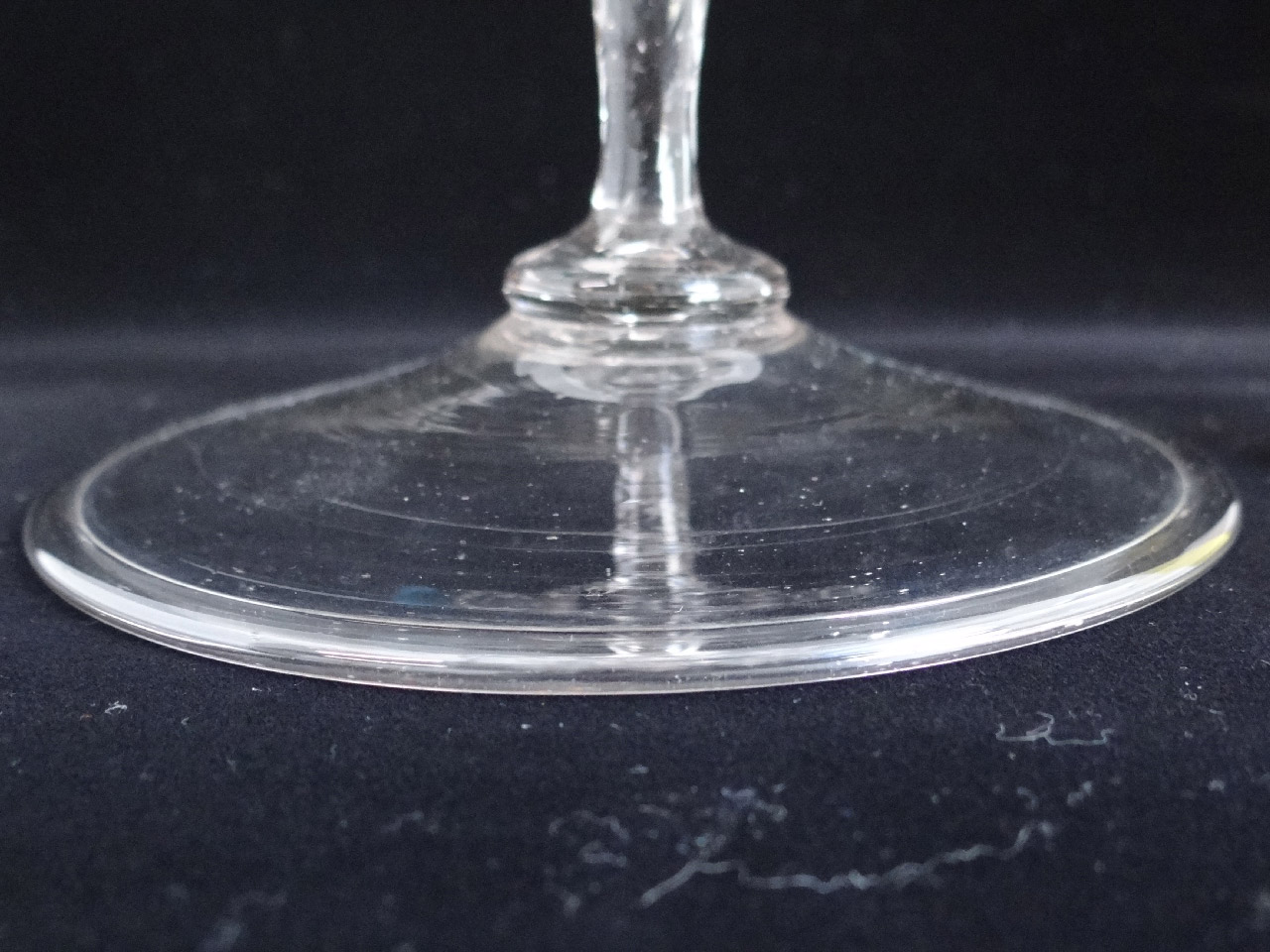
b.1 scratch(es) or abrasion, b.5 dust, dirt or stain(s), c.1 cloudy appearance
IC analysis of ion concentrations on the surface
IC shows relatively low concentrations of alkali ions on the glass surface.
pXRF analysis of the composition
The analysis shows that the glass is potash-lime glass (or possibly mixed-alkali glass). High concentrations of manganese and small amounts of lead were also detected.
Previous treatments
The object was probably cleaned in 2013 with a 4:1 mixture of demineralised water and ethanol. The cleaning method is unknown, and unfortunately no before-and-after photographs of the treatment are available.
Condition diagnosis
Condition (visual) poor
Condition (IC) likely stable
The results of the visual assessment and the IC analysis are inconsistent. This glass may well be stable. A[MS1.1]n additional IC analysis of the inside of the bowl could confirm this. If low concentrations of alkali ions are also measured on the inside, the diagnosis can be confirmed. The dull appearance and scratches on the object may well result from past handling and storage conditions.
(Click on photos to enlarge)
advice & treatment
Suggestions for packaging, handling, storage and transport
Advice: record the vulnerabilities of this object in the (museum) documentation system and/or at the relevant location in the (museum) storage facility.
The object’s extremely fragile shape means that handling should be kept to an absolute minimum.
Always wear nitrile gloves when handling the object. Never hold the object by its handles. Hold the object with both hands and support it properly. Place the object in a portable container and only handle it when absolutely necessary.
Keep the object in a separate cabinet with other unstable glass. Ensure the object is positioned so that its condition can be easily monitored and that it is readily accessible for inspection.
Suggestions for monitoring the environment and climate
Place the object in a stable environment with minimal fluctuations in relative humidity and temperature. It is highly advisable to monitor both the condition of the object and the climatic conditions regularly to detect changes at an early stage and to analyse any links with the environmental conditions.
Suggestions for treatment
Only a glass conservator can determine whether cleaning is desirable and feasible, which cleaning method to use and how to closely monitor the condition. If undertaken, only a glass conservator should clean the glass.
Suggestions for further research
Further research into glass instability, particularly in relation to cleaning, and into the storage of unstable glass is urgently needed.