Karel de Bazel
Karel Petrus Cornelis de Bazel (Den Helder, 1869 – Amsterdam, 1923) was not only a glass designer, but also an architect, engraver, draughtsman, and furniture and carpet designer. He sought connections between mathematical proportions, nature and the cosmos, and incorporated these ideas into his designs. Together with H. P. Berlage, he helped establish Rationalism in architecture. Alongside the many buildings he designed, De Bazel also created furniture and functional objects, including glassware.
In 1915, Leerdam Glass Factory (Glasfabriek Leerdam), under the direction of P. M. Cochius (1874–1938), began inviting artists to design functional and decorative glassware. De Bazel was attracted to the idea of making art more accessible through industrial production. He was the first artist to design multiple tableware services and vases for Leerdam Glass Factory, in both blown and pressed glass. Rather than giving each service (Dutch: servies) specific names, De Bazel identified them by letters.
Almost every De Bazel service included at least one Annagrün Rhine wine glass. Annagrün, or uranium glass, was produced mainly between 1870 and 1940 and used in a wide range of functional and decorative glassware. Production peaked between 1910 and 1930, the period when De Bazel was designing glassware for Leerdam Glass Factory.
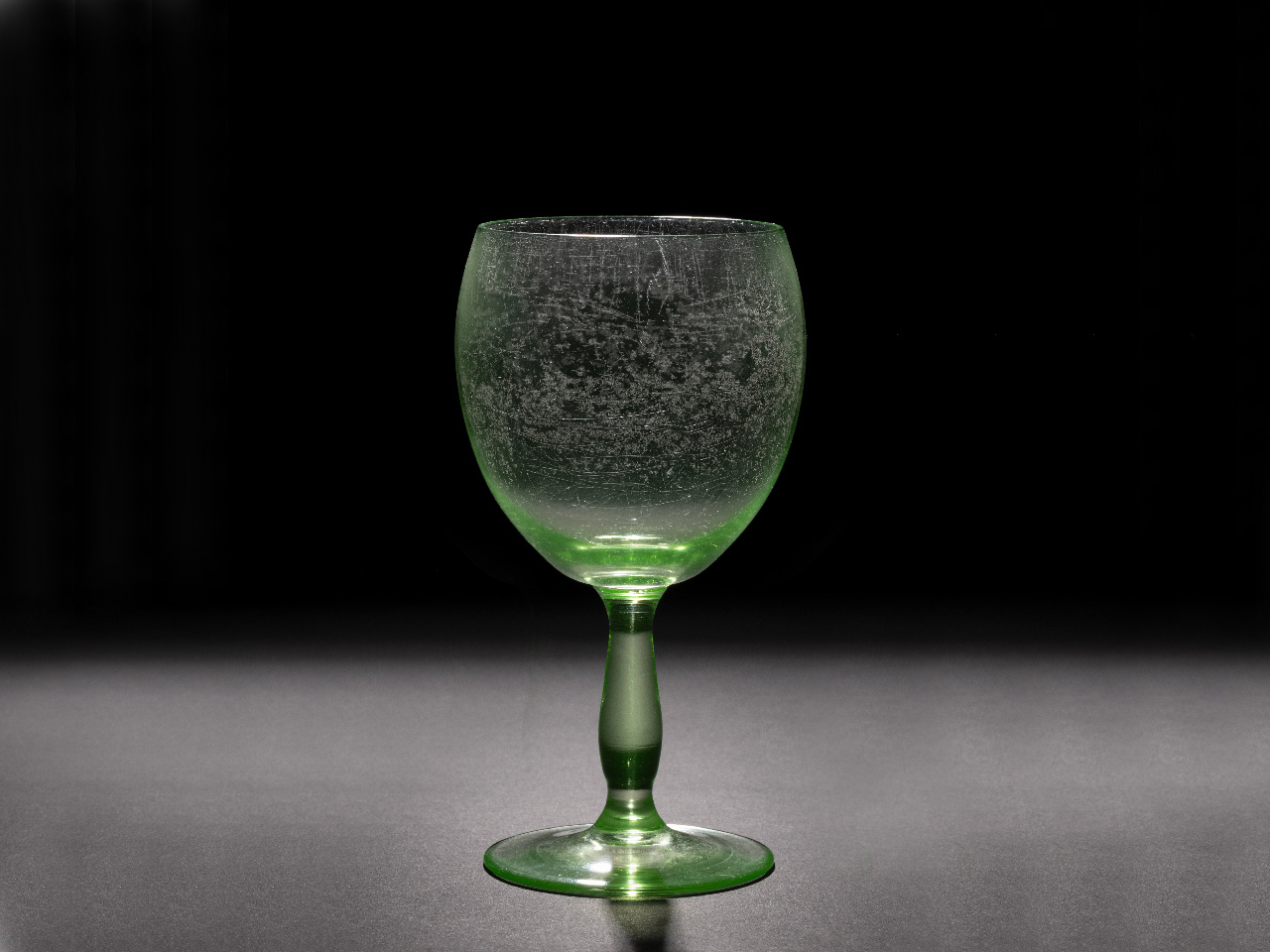
K. P. C. de Bazel, servies F (tableware F) - Wine glass, 1921 - 1923
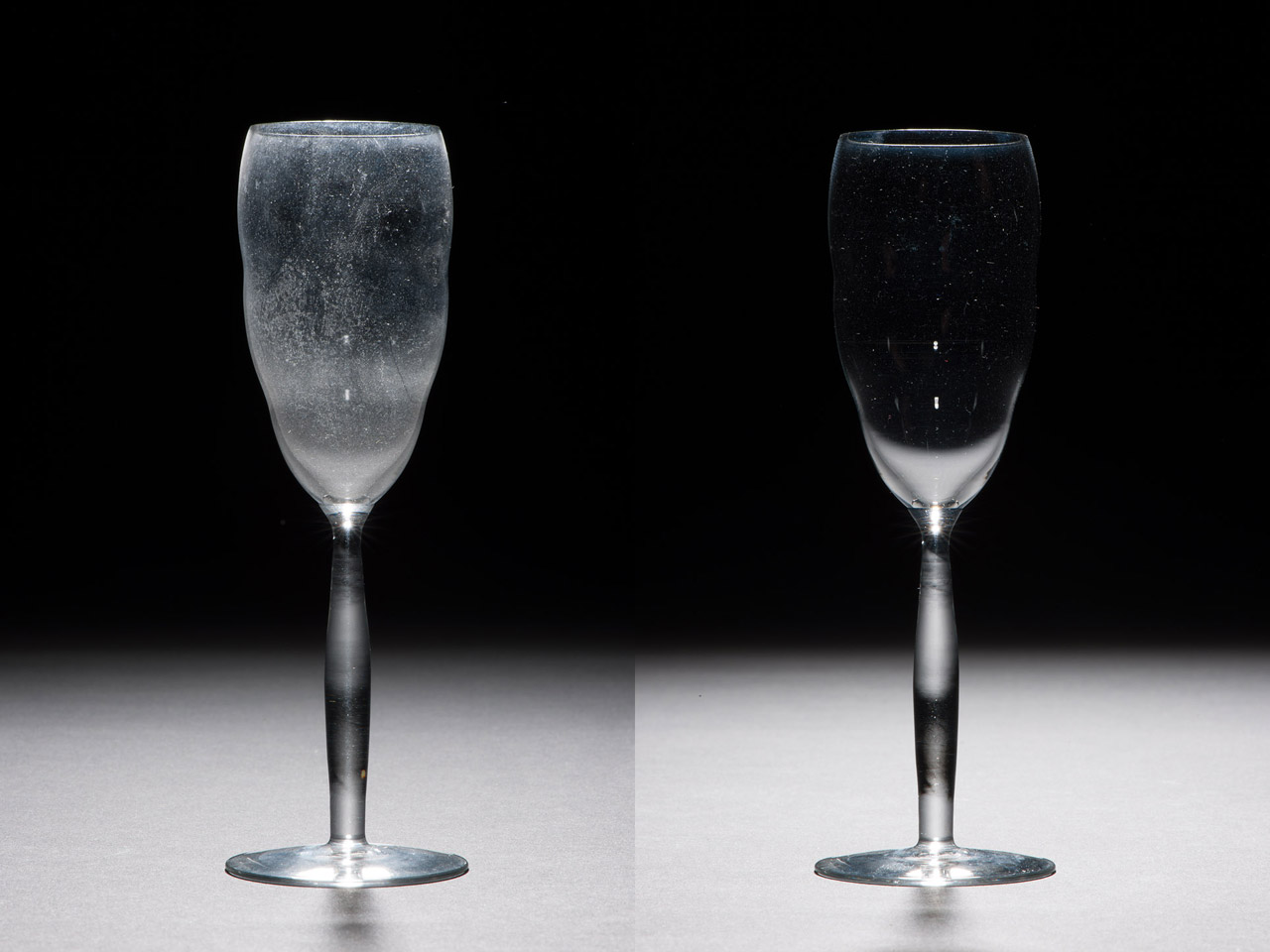
K. P. C. de Bazel, servies H (tableware H) - Port glass, 1918
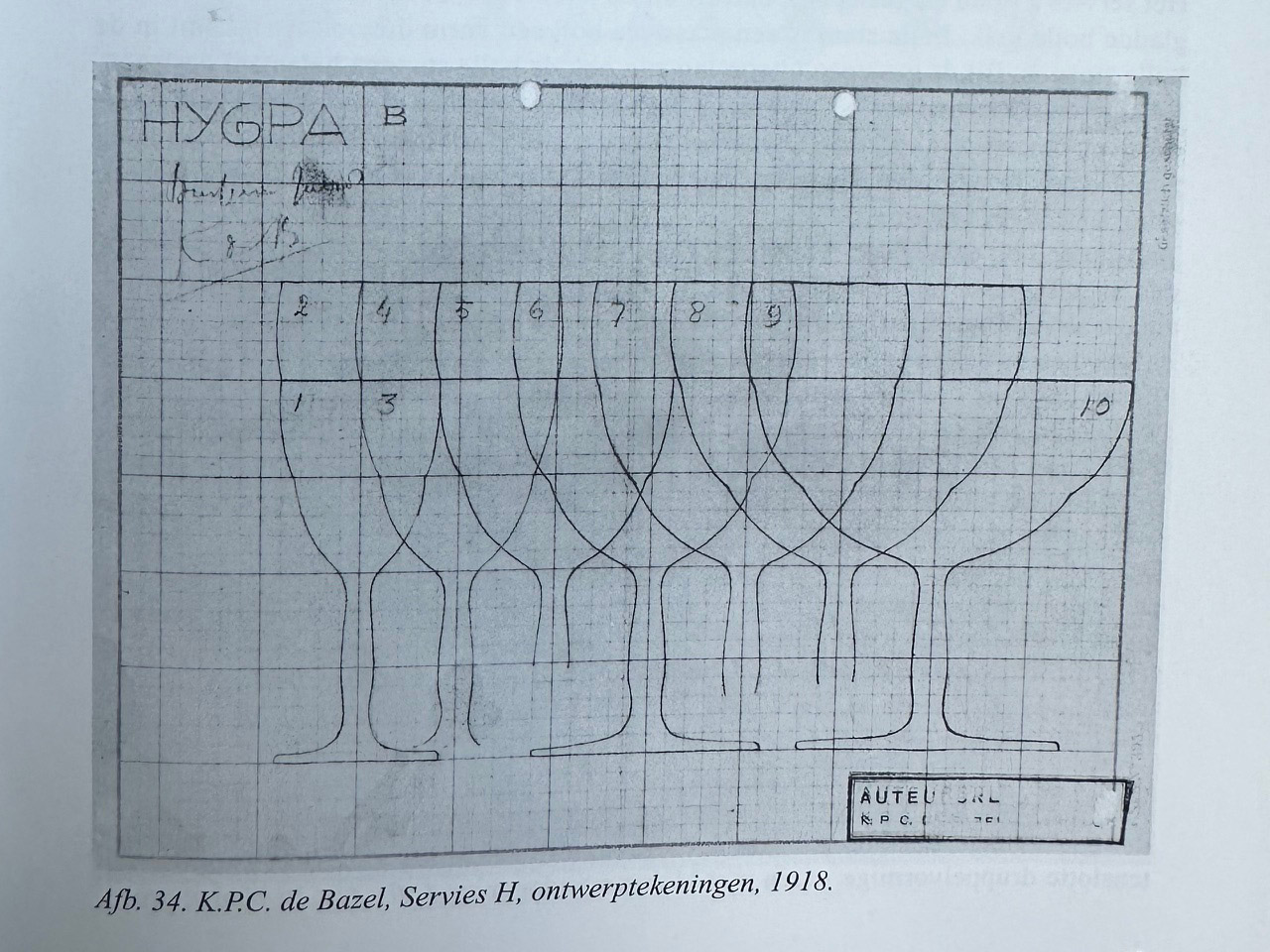 Design drawing, Servies H (tableware H)