drinking-glass rims
The various types of drinking rim can be used as indicators when dating glass, particularly industrially produced glass.
Traditional technique
To achieve a suitable rim, a small amount of extra glass was left at the top of the drinking bowl (known as a ‘cap’) whilst blowing the glass into the mould. After the annealing process, the cap was scored around the top with a diamond-point tool, allowing it to be detached by heating it on a rotating wheel. The rim could then be finished by grinding, sanding and polishing. To create a smooth rim, the glasses were placed in a carousel and flame polished, allowing the glass to melt slightly under heat. This technique is still used for higher-end wine glasses. Some consider the slightly sharper rim the only correct one for properly appreciating wine.
Modern technique
In the 1950s, a method was developed for separating the top of the bowl from the blowpipe by heating it at a specific point with a ring burner, allowing the bowl and cap to be pulled apart. This produces a relatively thick and polished rim. This method is now used worldwide for machine-made glass. Although the technique has been refined so that the resulting rim is as small as possible, it can still be recognised by the more rounded rim.
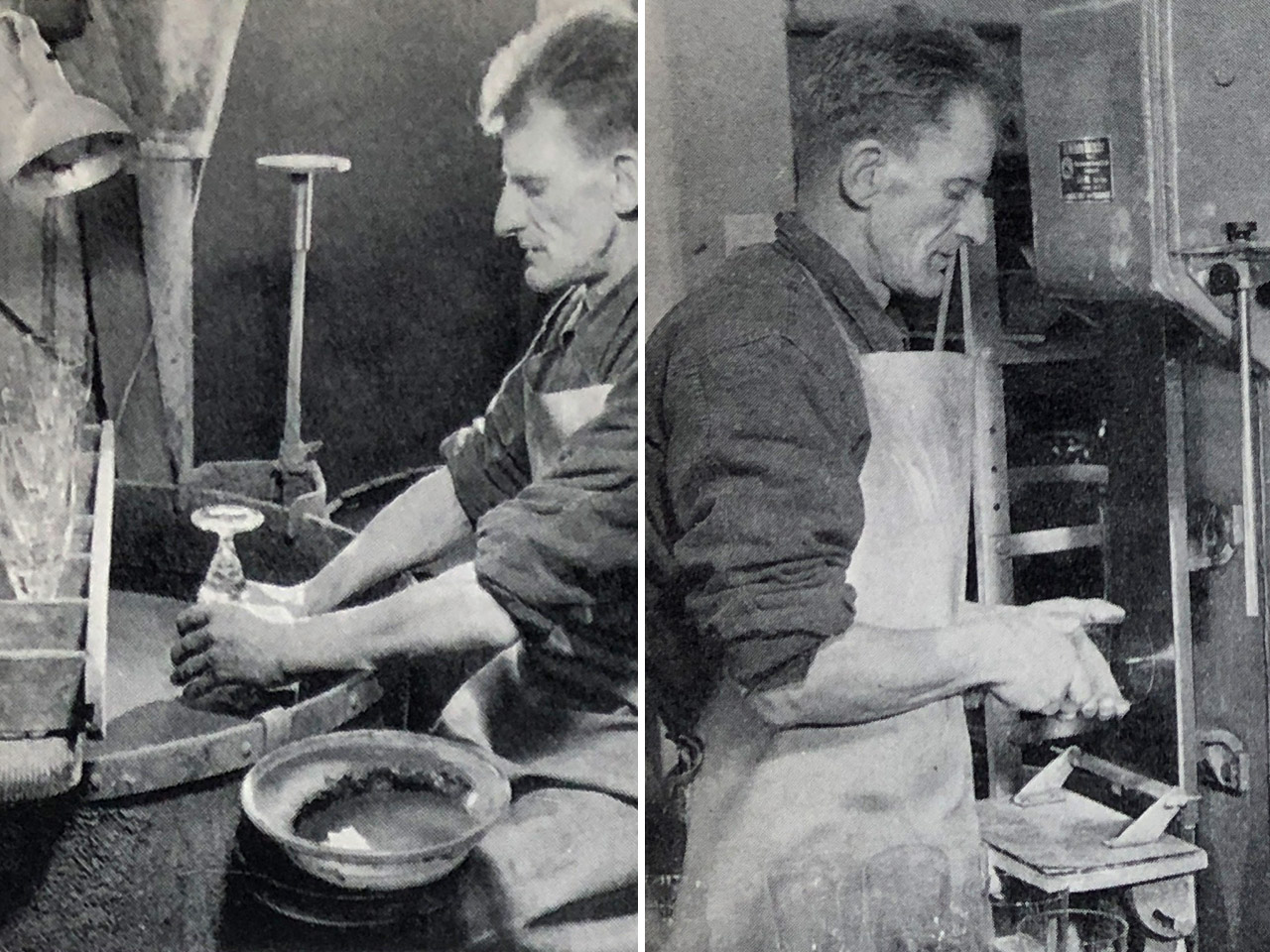 Grinding and polishing. Photographs from Steenberg, E. and Simmingsköld, B., Glas, Natur och Kultur, Stockholm, pp. 340–341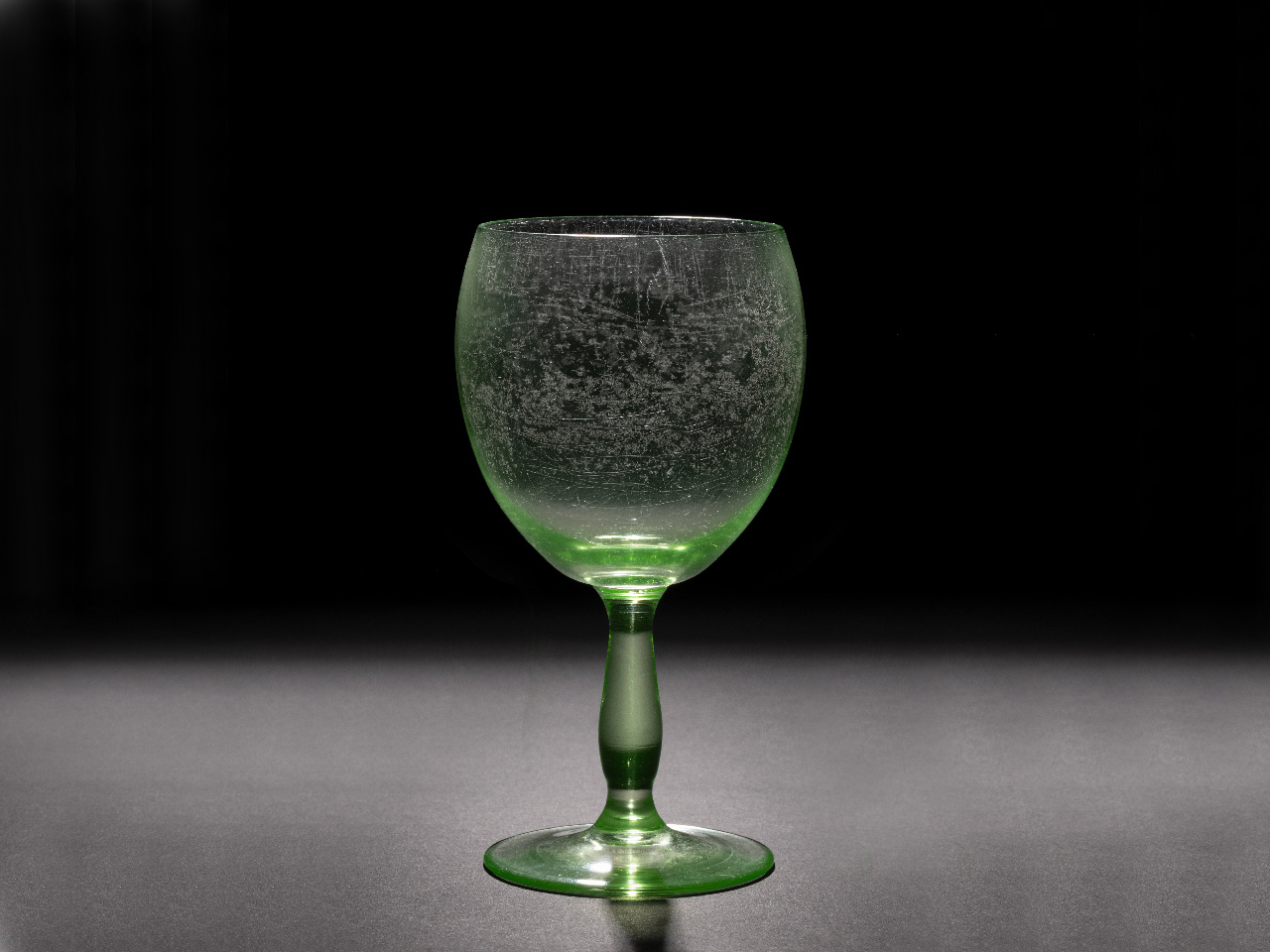
K. P. C. de Bazel, tableware F - Wine glass, 1921 - 1923
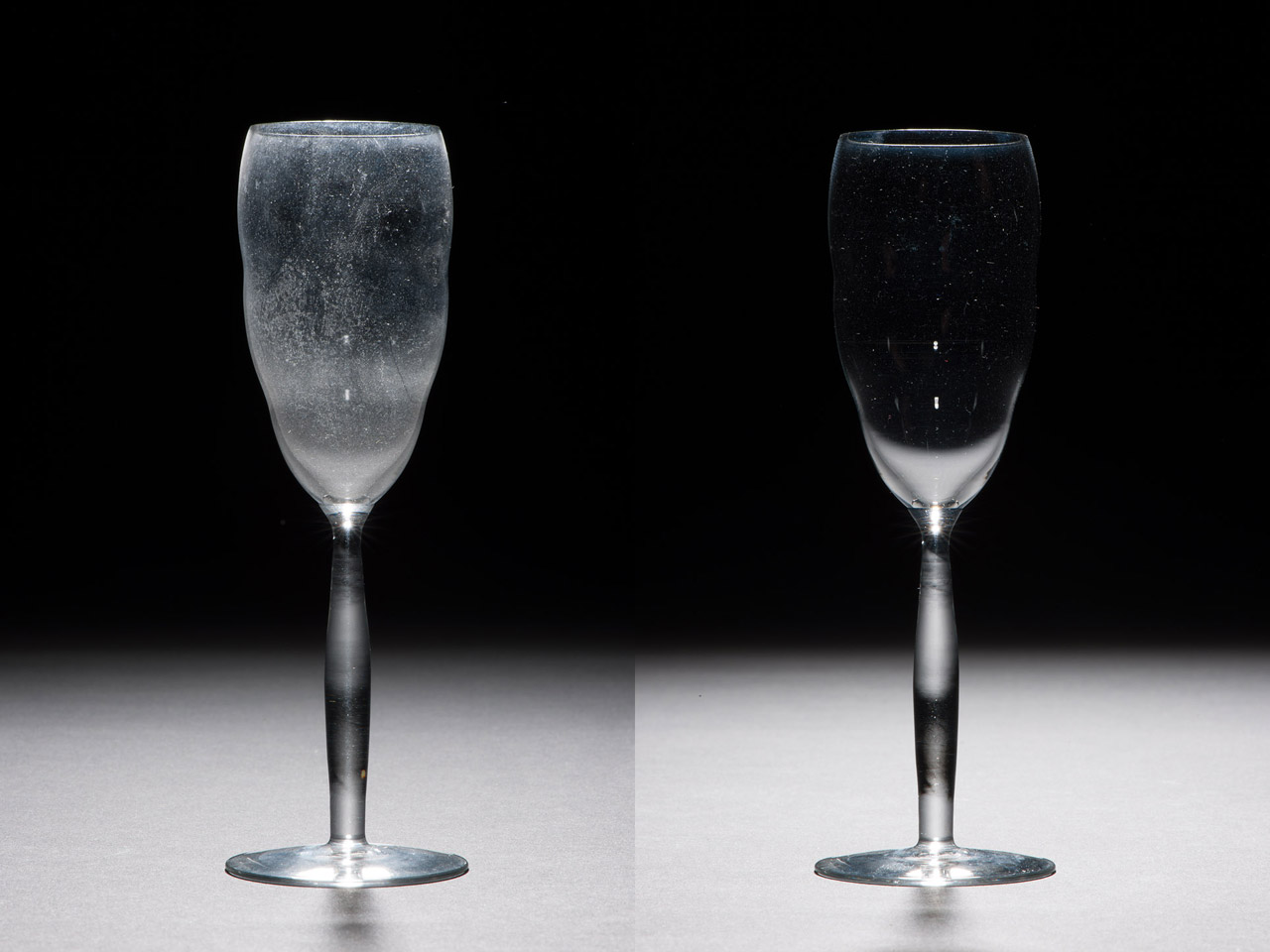
K. P. C. de Bazel, tableware H - Port glass, 1918