opal glass
Glass that is white may be referred to as
opal glass,
opaline, opaque glass or milk glass. Different sources provide varying descriptions of these terms.
Opaque white glass is a type of non-transparent glass resembling white porcelain, usually made opaque with tin oxide. Experiments with this type of glass began in Venice in the late 15th century, where it was also used for filigree decoration. It became popular alongside Chinese porcelain in the 17th and 18th centuries. It is often called ‘milk glass’, lattimo in Italian, Milchglas or Porzellanglas in German, and blanc-de-lait in French.
Opaline is a slightly translucent type of glass made opaque using ash from calcined bones and bone-meal (calcium phosphate) and coloured with metal oxides. Its hue is less intense than opaque white glass. The name came from ‘opalim’, a term used at the Baccarat glassworks in 1823. It is thought to have been first produced in Murano in the 17th century, inspired by coloured Bohemian glass. Production later spread to France and returned to Murano in 1932.
Opal glass is a translucent white glass made partially opaque with tin oxide. In light it displays brownish or reddish tones. It was produced in Venice in the 17th and 18th centuries, and in Germany and Bohemia, where it was made opaque with calcined bone ash containing 1–3% calcium phosphate, from the late 17th to the 19th century.
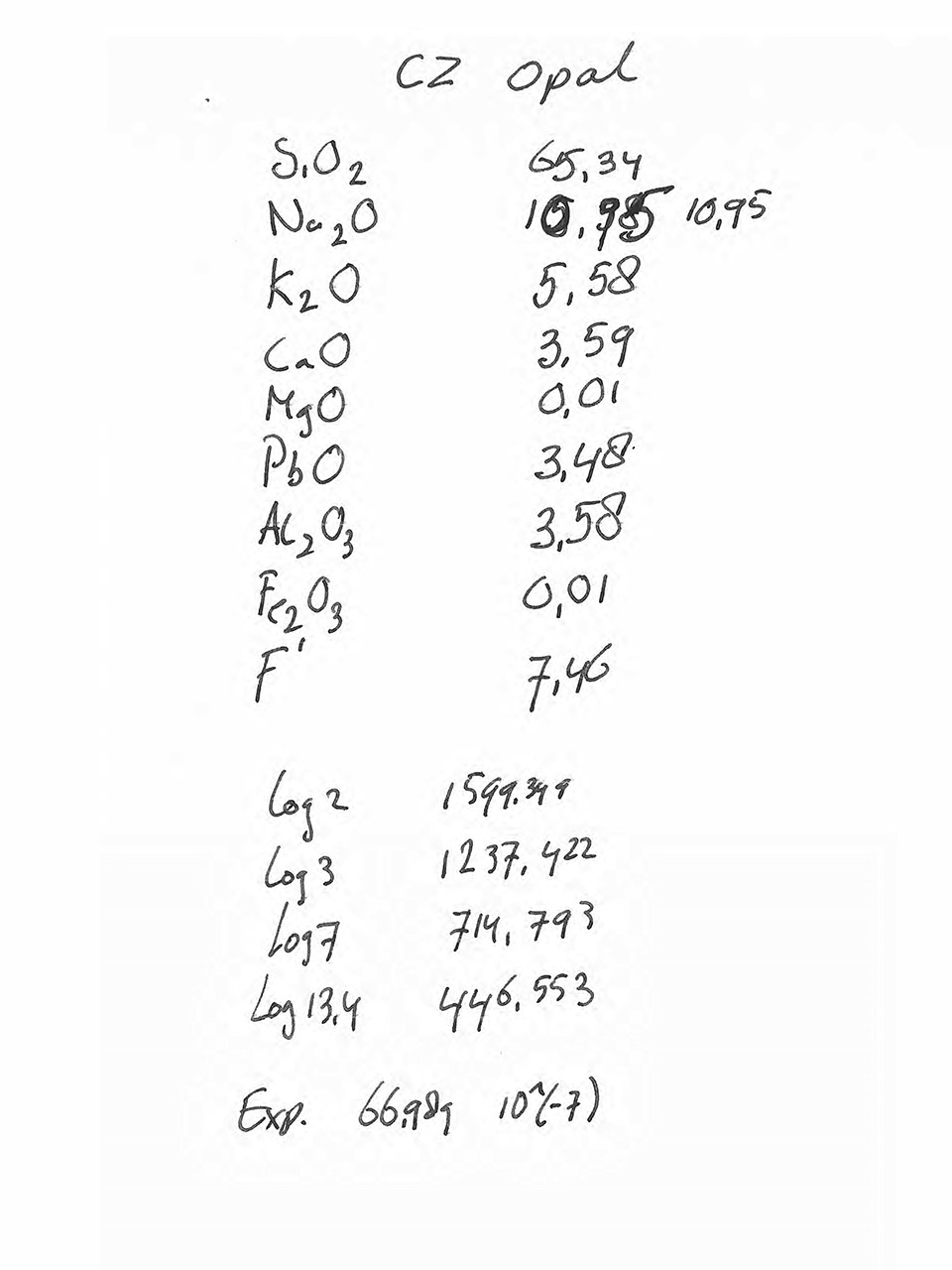
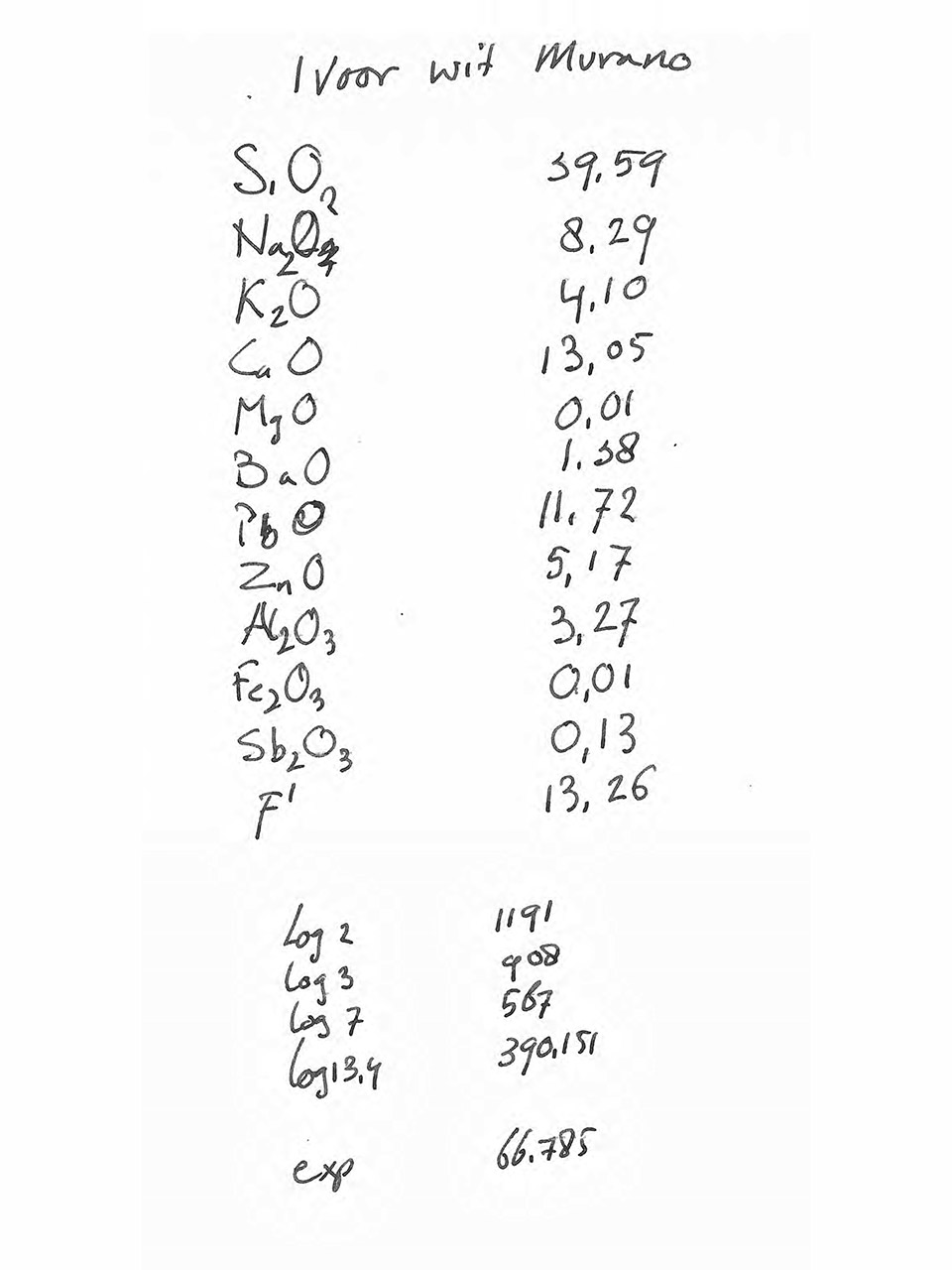
Two formulas by Durk Valkema are shown here. The CZ Opal formula corresponds to a number of glass samples in the study collection. L. Megens of the RCE analysed glass produced by
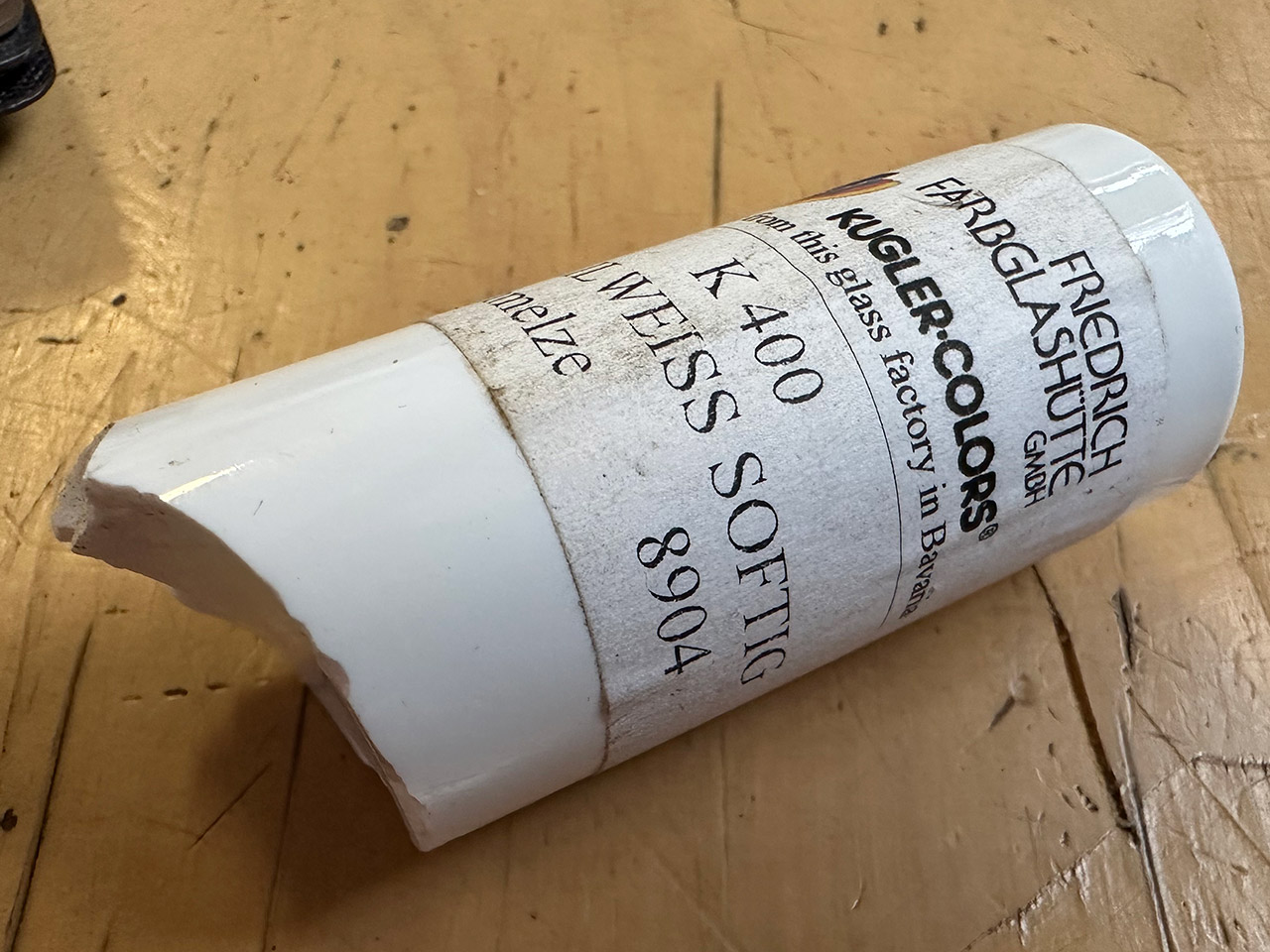
Kugler (Friedrich Farbglashütte GmbH), number K400 – All Weiss Softig 8904:
| SiO2 |
46 |
| PbO |
28,7 |
| Na2O |
11,3 |
| MgO |
4,9 |
| K2O |
3,9 |
| As2O3 |
2,3 |
| Al2O3 |
1,4 |
| BaO |
0,938 |
| ZnO |
0,618 |
| TiO2 |
0,35 |
| P2O5 |
0,272 |
| CaO |
0,191 |
| V2O5 |
0,104 |
| Fe2O3 |
0,092 |
| Cr2O3 |
0,069 |
| MnO |
0,039 |
| SnO2 |
— |