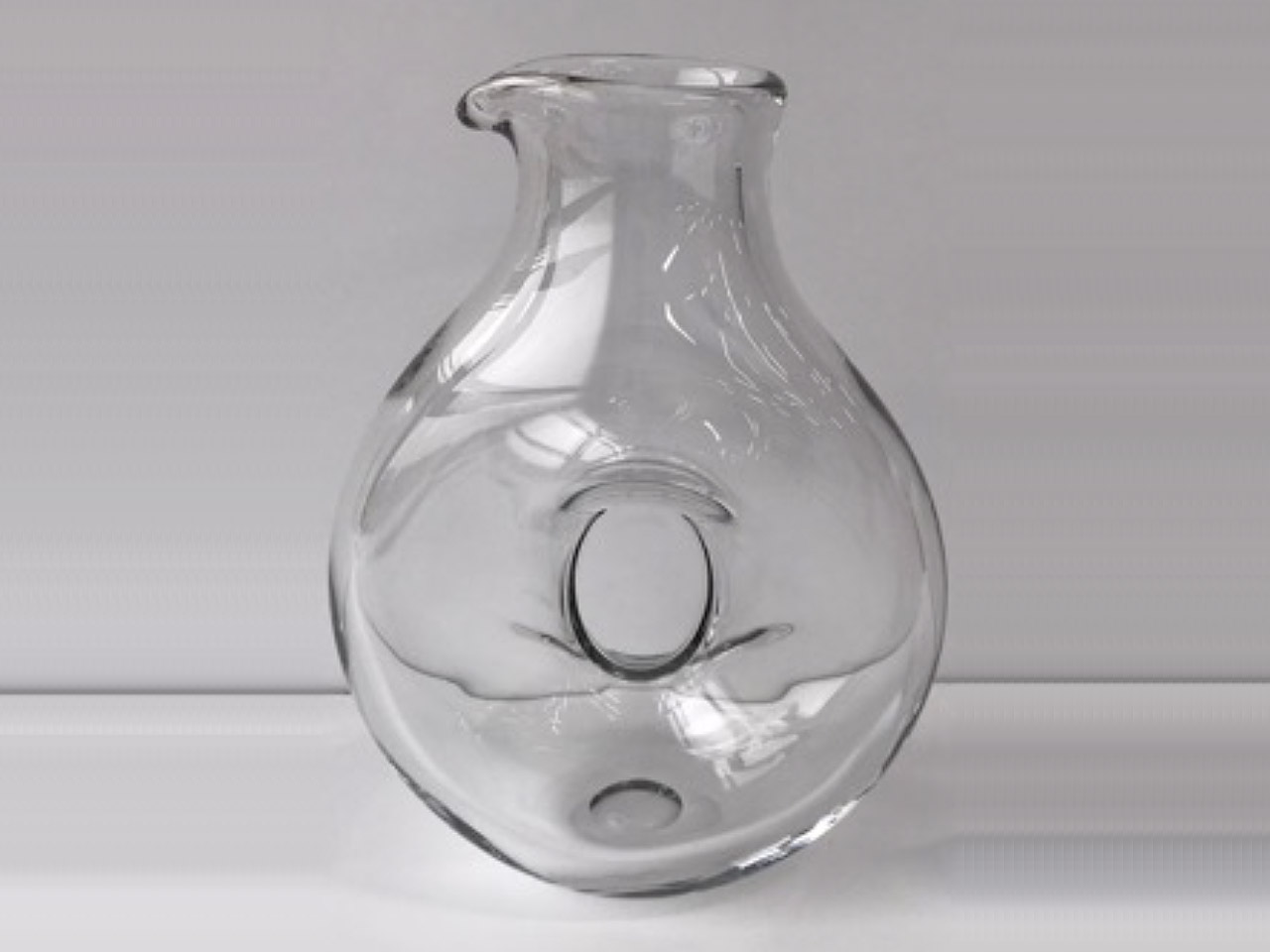
studio glass
The term ‘studio glass’ originated in the United States and refers to glass made as art by glassmakers in their studio. Until the late 1950s, glass artworks were generally designed by artists and executed by glassblowers. Glass was not yet established as an artistic medium in its own right. In the late 1920s,
Andries Copier was one of the first in the Netherlands to design glass works with greater artistic freedom, although he still worked in recognisable forms such as vases.
Harvey K. Littleton, an American who originally trained as a ceramics instructor, travelled to Venice in 1957 to study glassmaking techniques. Back in the US, he remained fascinated by the material and was eager to explore its possibilities on location. At a symposium in 1962, he met Dominique Labino, head researcher at a fibreglass manufacturer, who helped him build a small melting furnace, burners and an annealing oven. Littleton could now make his own glass in an artistic manner. Artists no longer had to rely on glassblowers and could experiment directly with the material to realise their ideas – a revelation that greatly enhanced creativity. Marvin Lipofsky and Samuel J. Herman were among the first of Littleton’s students to pursue their own practice in glass.
During the World Crafts Council’s 1964 international conference in New York, Littleton demonstrated free-form glassmaking outside the conference centre using his portable gas kiln. Glass designers from all over the world watched his demonstrations with great enthusiasm, many picking up a blowpipe for the first time. It was here that Willem Heesen and
Sybren Valkema met Littleton and were inspired by his working methods.